
Teaching English in Colombia means real classrooms, a legitimate work visa path, and salaries from $500 to $1,000+ a month. Here’s how to get started.
Colombia doesn’t get the same spotlight as South Korea or Spain in teach-abroad conversations, and that’s exactly why it’s worth a closer look.
Teaching English in Colombia gives you something many Latin American countries can’t: a genuine, employer-sponsored work visa system, rather than the tourist-visa gray area common elsewhere in the region. Add in a low cost of living, a government actively investing in bilingual education, and cities ranging from cosmopolitan Bogotá to eternally spring-like Medellín, and Colombia earns its spot on any serious teach-abroad shortlist.
Here’s exactly how the pathways work, what you’ll earn, and how to get your visa sorted before you go.

Plaza de Bolívar in Bogotá — the heart of Colombia’s capital and one of its biggest teaching markets.
Who Can Teach English in Colombia?
Colombia is more flexible on qualifications than most people expect, though the best-paying jobs still go to degree holders. Requirements vary significantly by institution type. Language schools often hire without a degree, while international schools and universities require one, along with a relevant teaching credential.
Native English speaker status isn’t a strict requirement either. Near-native proficiency, demonstrated through education or professional experience, can be enough at many language schools. International schools and universities are the exception, and here, a relevant degree and often a teaching license or master’s degree become non-negotiable.
A TEFL certificate, ideally 120 hours or more, is expected almost everywhere. Spanish isn’t required to teach, but it’s strongly recommended for daily life outside the classroom.
Colombia’s Government Teaching Program: TEC and SENA
TEC operates through SENA (Servicio Nacional de Aprendizaje), Colombia’s public vocational training institution, which describes itself as offering free technical and language training programs nationwide, according to its official site.
TEC volunteers teach vocational English to adult learners rather than children. The program structures the role as volunteer work rather than paid employment. In exchange, participants receive a monthly stipend of roughly 1.5 million Colombian pesos, about $500 USD. This stipend covers basic living costs, especially for those sharing housing with other volunteers.
Timing matters if this route interests you. TEC applications typically open between September and December for a January start. A separate Ministry of Education initiative also places teachers directly in public schools in underserved communities. Approved recruiters, such as Greenheart Travel, often handle these placements.
If you’re weighing government programs against each other, our TAPIF guide covers how France’s government teaching assistantship compares to a host-country volunteer program like TEC.
Language Schools, Bilingual Schools, and Universities
Beyond TEC, most teachers in Colombia find work through private language schools, bilingual private schools, or universities, and each option comes with its own pay scale and requirements. Language schools offer the broadest hiring pool. They also have the most flexible entry requirements, often accepting teachers without a degree, particularly at smaller independent institutes.
Bilingual private schools, known locally as colegios bilingües, sit a step up from language schools. They generally require both a TEFL certificate and a bachelor’s degree, and pay lands somewhere between language school and international school rates. International schools and universities represent the top tier. They pay more and offer the most competitive positions, but they demand a relevant degree, a teaching license, and typically two or more years of experience.
Bogotá’s business concentration also supports a strong corporate English market. Rates run $15-25/hour for teachers with several months of local experience in the city.

El Peñol, just outside Medellín — one of many reasons teachers who choose Colombia end up staying longer than planned.
What Does Teaching English in Colombia Pay?
Salaries in Colombia vary widely by institution type, ranging from roughly $500 a month in volunteer programs to $1,000 or more at established language schools and private institutions. According to TEFL Org’s Colombia salary data, full-time teaching positions typically pay between COL$3.4 million and COL$4.2 million per month, or roughly $850-$1,035 USD.
University positions and corporate English contracts represent the higher end of the pay scale, while public school and TEC volunteer roles sit at the lower end but come with lower living costs to match. Housing, airfare, and health insurance are common perks at private and international schools, though they are rarely offered at smaller language institutes.
Getting a Work Visa to Teach in Colombia
Colombia’s M visa system is a genuine structural advantage over many other Latin American countries. Elsewhere in the region, teachers often work in a gray area between tourist visas and actual legal employment. To legally teach in Colombia, you’ll need an employer-sponsored M-5 (Migrant) work visa. This visa requires a confirmed job offer before you apply.
Many teachers still arrive on a 90-day tourist visa to job hunt in person, since employers often respond faster to in-person applications than emails. Once you secure a position, your employer typically handles the visa paperwork. After approval, you’ll register for your cédula (national ID card) at a local immigration office within 15 days.
TEC handles visa processing directly for its participants. You’ll arrive on a visa tied specifically to your volunteer placement.
Is Colombia Safe for Teachers?
Colombia’s safety reputation has shifted significantly since the instability of past decades, and established expat teacher communities now function well in major cities. Teachers consistently describe feeling safe in the tourist-friendly and expat areas of Bogotá, Medellín, Cali, and Cartagena, while maintaining the same sensible precautions expected in any large Latin American city — avoiding showing off valuables, using rideshare apps rather than street taxis, and staying alert in unfamiliar areas at night.
New arrivals should quickly lean on the local expat and teacher community to learn which neighborhoods warrant extra caution in each city.
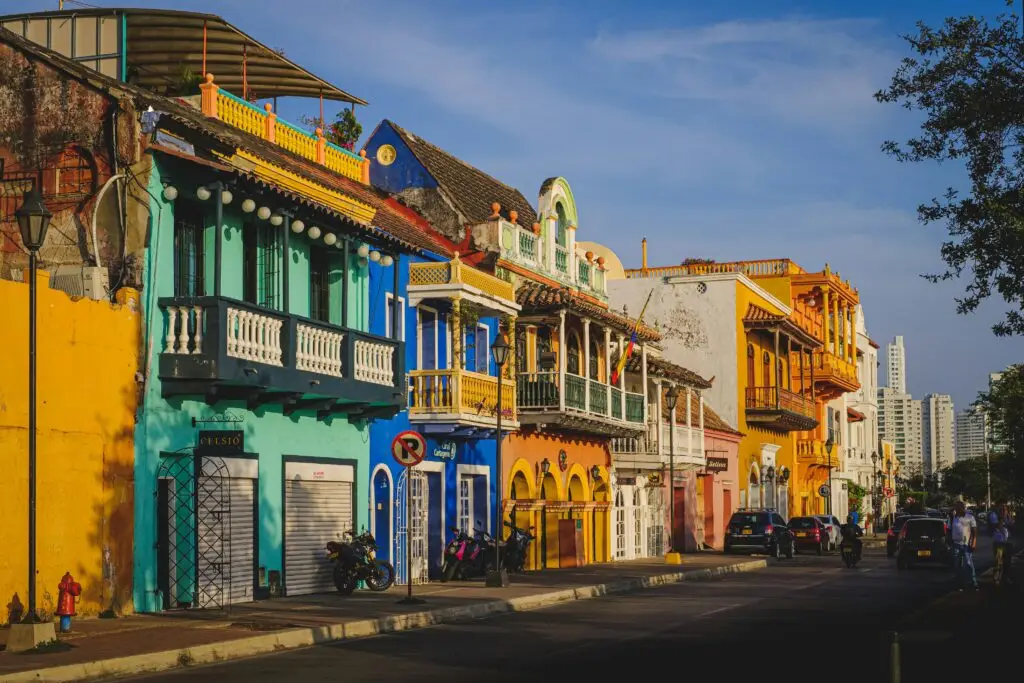
Cartagena’s colonial architecture, with the modern city skyline rising behind it — a glimpse of Colombia’s range.
FAQs: Teaching English in Colombia
Q: Do you need a degree to teach English in Colombia?
A: Not always. Language schools, especially smaller independent ones, sometimes hire without a degree. However, international schools, universities, and the TEC program generally expect at least a bachelor’s degree.
Q: Is the TEC program only for U.S. citizens?
A: Yes. TEC is exclusively open to U.S. citizens, while a separate Colombian university program has historically been available to UK citizens.
Q: How much can you save teaching English in Colombia?
A: It depends heavily on the position. Volunteer and public school roles mostly cover living costs, leaving little to spare. Alternatively, established language schools, international schools, and corporate English work offer significantly more room to save.
Q: Can you teach English in Colombia without speaking Spanish?
A: Yes, Spanish isn’t required to teach, though it’s strongly recommended for daily life, since most day-to-day interactions outside expat areas happen in Spanish.
Q: What’s the best time of year to look for a teaching job in Colombia?
A: Language schools and private institutions hire the most heavily from November through January for the new semester. TEC applications open several months earlier, from September through December, for a January start.
Getting Started
Colombia rewards teachers willing to do a little homework on visas and program types before diving in. However, the payoff is real classroom experience, a legitimate legal work framework, and some of South America’s most livable, affordable cities.
Start with our free Teach Abroad Starter Checklist to map out your timeline, or dive into the Ultimate Teach Abroad Toolkit for a full country-by-country comparison.