
Where to live in Prague, compared honestly: Vinohrady, Žižkov, and Karlín by rent, commute, and vibe — no vague “it depends.”
Three Neighborhoods, Three Very Different Prague Experiences
Where to live in Prague isn’t really a question with one right answer. Instead, it’s a question of which trade-off you’d rather make. Vinohrady, Žižkov, and Karlín are the three neighborhoods most expats and teachers actually end up choosing between. Each one asks something different of you: budget, patience for hills, or tolerance for polish over patina.
If you’re still deciding whether to make the move at all, the Teach in Europe Guide covers that decision first. This post assumes you’re past that — you know you’re coming, and now you need to pick a neighborhood.
Vinohrady, Žižkov, and Karlín, Side by Side
| Vinohrady | Žižkov | Karlín | |
|---|---|---|---|
| 1-bedroom rent | 18,000–28,000 CZK | 14,000–22,000 CZK | ~20,000–30,000 CZK |
| Vibe | Elegant, café-lined, walkable | Gritty, authentic, artistic | Polished, modern, riverside |
| Transit | 2 Metro A stops | Mostly tram; Metro A at the edge | Metro B, 1–2 stops to center |
| Best for | First-year soft landing, remote workers | Budget-first, nightlife, artists | Tech workers, foodies, polish |
These numbers come from TheExpatCity’s June 2026 market sample of live rental listings, cross-checked against Investropa’s Deloitte Rent Index data. Treat them as a strong starting position — Prague’s rental market moves fast, and Žižkov in particular is no longer quite the bargain its old reputation suggests.
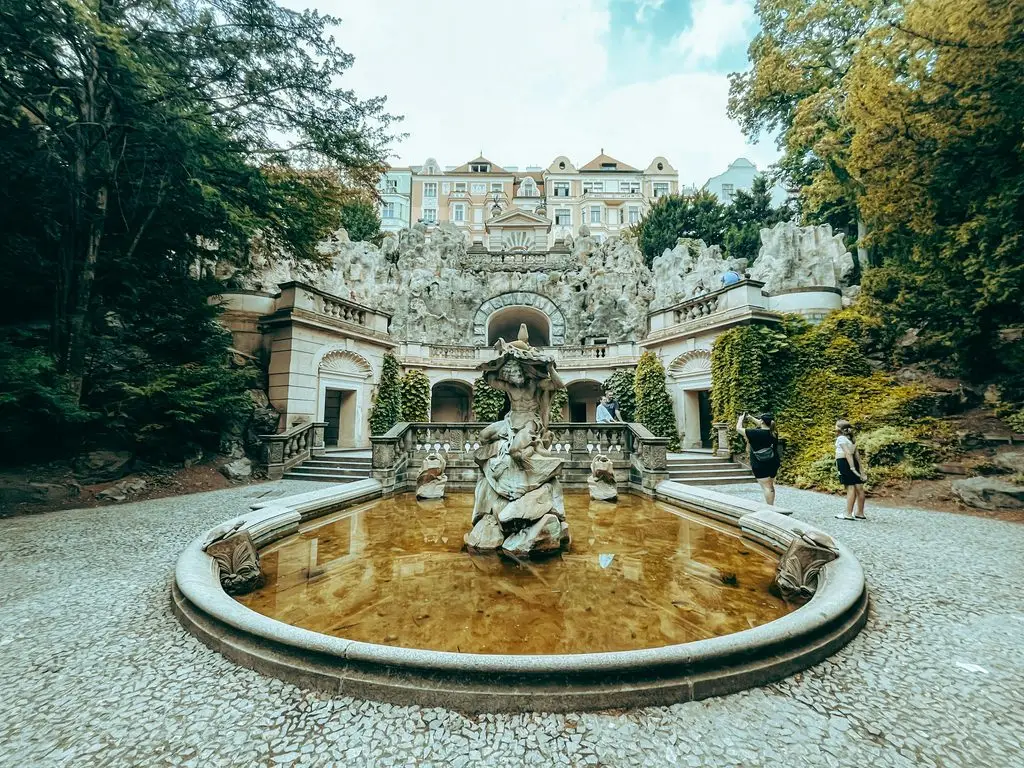
Grébovka Park’s grotto — one more reason Vinohrady tops the list for a soft landing.
What Is Vinohrady Like to Live In?
Vinohrady is the expat default, and the Habsburg-era architecture, three parks, and dense café scene explain why. Prague 2 runs about 4% above the citywide rental average, and a well-located furnished one-bedroom typically costs 18,000–28,000 CZK/month.
The neighborhood is also Prague’s de facto gay quarter, anchored along Vinohradská between Náměstí Míru and Muzeum. In addition, its streets around náměstí Míru and Mánesova have become the city’s wine bar center over the past decade. Small, Moravian-focused spots pour Grüner Veltliner and Frankovka from producers most visitors have never heard of. Two Metro A stops keep the whole area well connected. So, are you weighing where to live in Prague as a first- or second-year teacher? Vinohrady’s soft landing is hard to beat. It also suits freelancers and couples without kids who value walkability over grit.
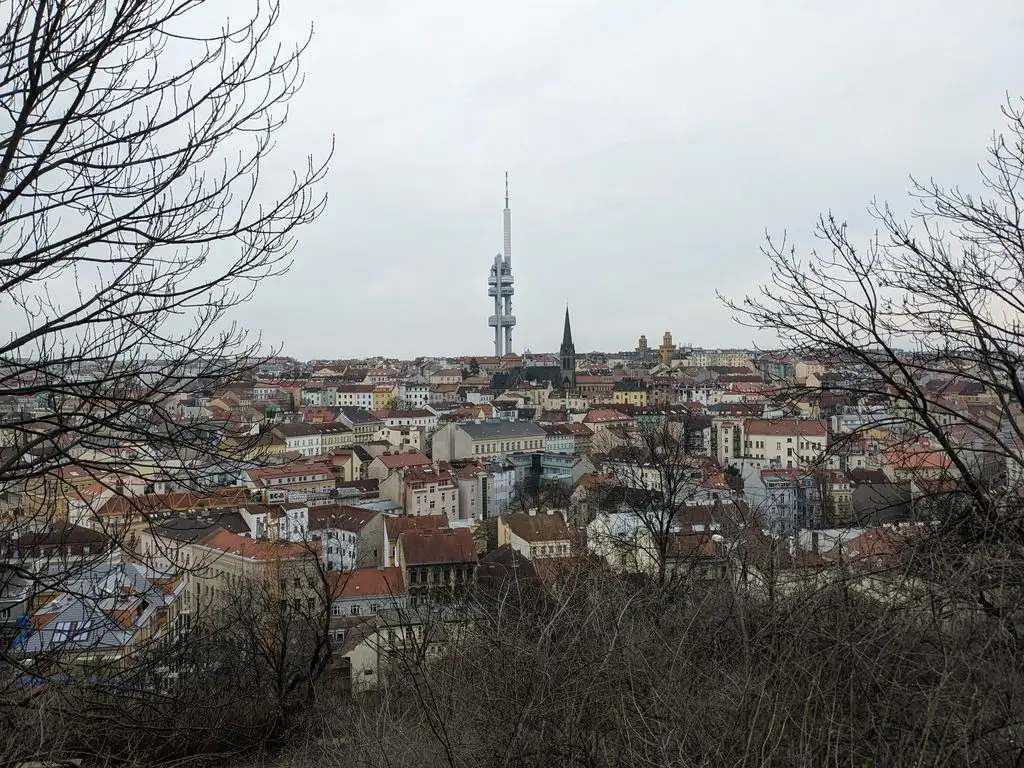
Žižkov, from above — hills, rooftops, and the tower that gives it away every time.
What Is Žižkov Like to Live In?
Žižkov is Prague’s pub district. In fact, it has the highest density of pubs per capita in Europe. Most of them cluster around Bořivojova and the base of the Žižkov Television Tower. Rents run 14,000–22,000 CZK/month for a one-bedroom — genuinely cheaper than Vinohrady. That said, the old “bargain neighborhood” reputation undersells how much the market has moved.
The streets are steep, but the neighborhood earned its edge honestly. Working-class origins, David Černý sculptures near the TV Tower, and an artistic community all give it real character. It’s the opposite of manufactured grit. Metro A touches the southern edge at Flora and Želivského (Flora is closed for renovation until around December 2026). As a result, trams do most of the real work here — frequent, if not glamorous. Overall, Žižkov fits early-career teachers for whom budget is the binding constraint. It also suits anyone who wants nightlife and authenticity over polish.
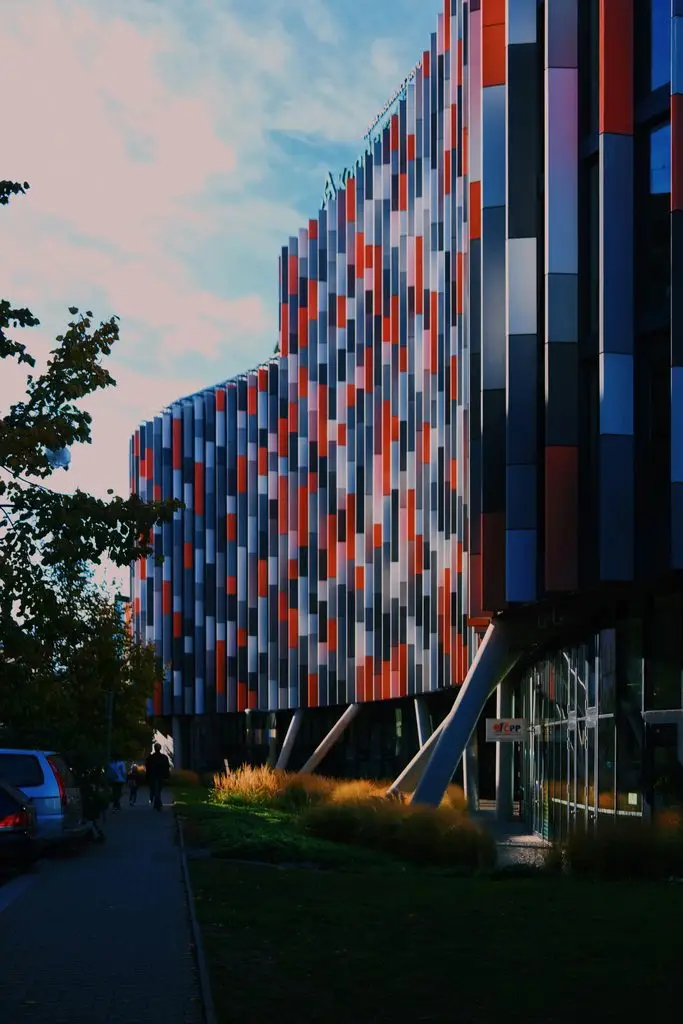
Main Point Karlín — the kind of building that only exists because the neighborhood rebuilt itself from the ground up.
What Is Karlín Like to Live In?
Karlín gets described as “rebuilt from scratch” after the catastrophic 2002 floods, but that’s not quite accurate — the 19th-century street grid and building bones survived; what changed was everything inside and around them. The result is Prague’s most architecturally renovated neighborhood: wide, flat, easy-to-walk streets, restored Art Nouveau blocks, and what’s widely considered the city’s strongest restaurant scene.
One-bedroom rents run roughly 20,000–30,000 CZK/month, putting Karlín close to Vinohrady in cost. Metro B gets you to Florenc in one or two stops, or the historic center in about a 15–20 minute walk. For anyone deciding where to live in Prague who values modern polish over historic patina, Karlín is the clear pick — the old ČKD factory now houses the Corso Karlín office complex, and the area remains a magnet for tech workers and young professionals. As one guide put it, Karlín is “pleasant rather than postcard-pretty,” and that’s worth knowing going in.
Which Neighborhood Fits Your Budget?
If budget is the deciding factor, Žižkov wins clearly — its 14,000–22,000 CZK range sits meaningfully below both Vinohrady and Karlín, even accounting for recent price increases. Vinohrady and Karlín land in a similar bracket, both in the 18,000–30,000 CZK range depending on the exact street and building condition.
Splitting a flat changes the math everywhere. A shared apartment in any of the three neighborhoods typically cuts per-person housing costs by close to half, which is the move most first-year teachers actually make regardless of which area they pick.
Which Neighborhood Has the Best Commute to the Center?
Karlín has the shortest commute on paper — one or two Metro B stops to Florenc, or a 15–20 minute walk to the historic center. Vinohrady’s two Metro A stops keep it close as well, and navigating Prague’s public transportation system means either neighborhood puts you well within a single ticket’s reach of downtown.
Žižkov is the outlier: it relies mainly on trams rather than the metro, and its hilly streets can make the walk to a tram stop more work than the ride itself. None of the three neighborhoods leaves you truly far from the center — this is more a question of which mode of transit you’d rather rely on daily.
FAQs: Choosing a Prague Neighborhood
Q: Which Prague neighborhood is best for first-time expats? A: Vinohrady is the most common first choice — it’s walkable, well-connected, and has the largest existing expat community, which makes the first few months easier to navigate.
Q: Is Žižkov safe to live in? A: Yes, by most standards — Prague overall is a very safe city. Some Žižkov streets feel a bit rougher at night than Vinohrady or Karlín, but “rough” overstates it by most city standards.
Q: Is Karlín too expensive for a teacher’s salary? A: It’s comparable to Vinohrady, not dramatically more expensive, and splitting an apartment brings it well within reach of a typical teaching salary in Prague.
Q: Do I need to live near a metro station in Prague? A: No — Žižkov proves that a tram-heavy neighborhood works fine, since Prague’s tram network runs frequently and covers the city thoroughly, as long as you don’t mind skipping the metro.
Pick the Trade-Off, Not the “Best” Neighborhood
There’s no objectively correct answer here — just a set of honest trade-offs. Vinohrady buys you an easy landing, Žižkov buys you a lower rent and real character, and Karlín buys you polish and the best food in the city. Pick the one whose downside you can actually live with.
For the full picture on moving to Prague, the Teach in Europe Guide covers the bigger decision. For the budget this fits into, see Cost of Living in Prague as a Teacher.
Still exploring teaching abroad? Get the Free Checklist