
How to find an apartment in Prague — where to search, what a deposit actually costs, and how to skip the broker fee entirely.
Why This Deserves Its Own Post
How to find an apartment in Prague isn’t really one question — it’s five smaller ones: where to search, furnished or not, how much cash you need upfront, whether to use a broker, and what to check before signing. Get any one of those wrong and the whole move gets more expensive or more stressful than it needs to be.
If you’re still deciding whether Prague is the right move, the Teach in Europe Guide covers that decision. This post assumes you’re past that — you’re going, and now you need a place to live.
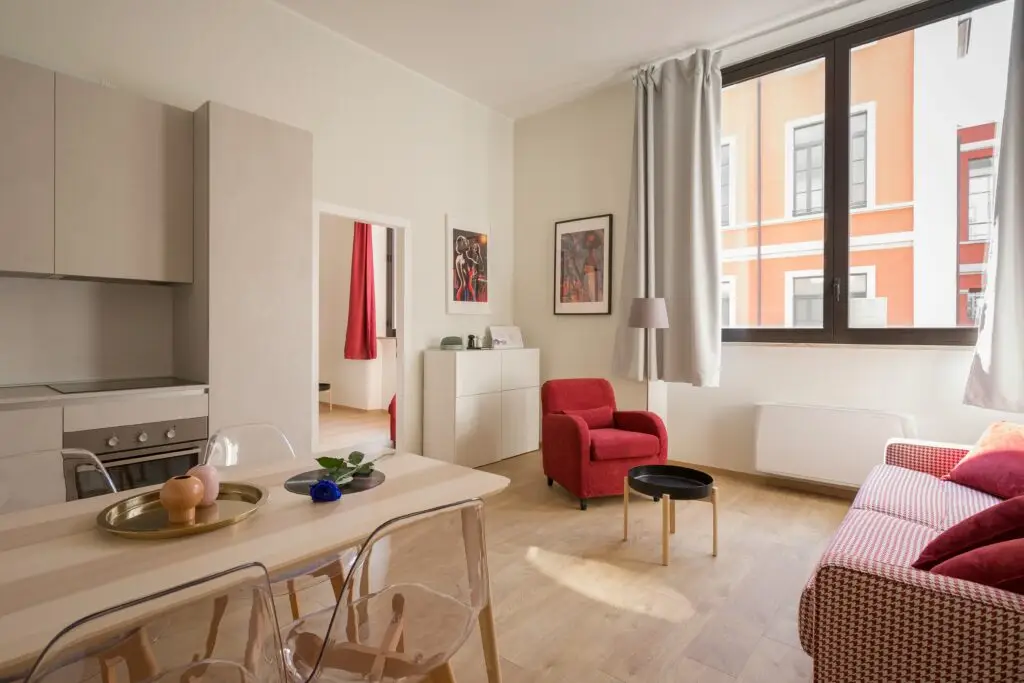
This is the “furnished” apartments actually deliver on — worth the premium if you ask us.
Where Do You Actually Search for an Apartment in Prague?
The two biggest Czech rental portals are Sreality.cz and Bezrealitky.cz, and the difference between them matters more than it looks. Sreality lists the most inventory, but most listings run through an agency, which usually means a broker fee. Bezrealitky — the name literally translates to “without realtors” — connects you directly with landlords, which is why it’s the go-to for expats trying to avoid that fee.
For a more guided, English-language experience, expat-focused platforms like HousingAnywhere and Flatio cater specifically to international renters, with HousingAnywhere built around mid-term stays and a booking-safeguard system, and Flatio marketed specifically as a no-broker-fee option. A private Facebook expat housing group is also worth joining—many sublets and lease takeovers never make it to a public listing site.
Should You Rent Furnished or Unfurnished in Prague?
Furnished apartments cost roughly 15–25% more than unfurnished equivalents. For most first-year teachers and expats, that premium usually pays off. Furnishing an apartment from scratch for a one- or two-year stay rarely makes financial sense — you’d still have to resell or abandon everything when you leave.
Unfurnished makes more sense if you’re staying multiple years or already own furniture from a previous posting. If you go furnished, confirm exactly what’s included. “Furnished” can mean a fully equipped kitchen, or just a bed and a table. Czech listings don’t always spell out the difference clearly.
How Much Is the Deposit, and What Else Do You Pay Upfront?
Expect to pay a reservation fee equal to one month’s rent plus VAT, plus a security deposit (kauce) of one to two months’ rent. Both are due before or at lease signing. If you go through a broker, add another month’s rent as their fee. That means moving in through an agency can require three to four months’ rent in cash before you’ve even unpacked.
The landlord holds the deposit directly. Unlike some countries, there’s no government-backed protection scheme. Expect it back within about a month of move-out, once you settle any final utility accounts. Get the deposit terms in writing — disputes over normal wear versus damage happen everywhere, not just in Prague.
Should You Use a Broker, or Skip the Fee Entirely?
Skipping the broker fee is possible, and platforms like Bezrealitky and Flatio exist specifically to make that easier — but it comes with tradeoffs. Broker-free listings move fast in Prague’s competitive market, and without an agent screening properties for you. You are doing more of the legwork and more of the Czech-language reading yourself.
A broker earns their fee by pre-vetting listings, handling paperwork, and often speaking enough English to smooth over a language gap. If you’re arriving with no Czech and limited time to search in person, that fee sometimes buys real peace of mind. If you have more time than money, or you’re comfortable navigating Czech-language listings and contracts, going broker-free is a legitimate way to save a full month’s rent.
Is It Common for Utilities to Be Included?
Sometimes — but don’t assume it. Standard Czech leases usually list utilities (electricity, gas, water, and a building service charge covering shared spaces and administration) as separate from rent, paid directly by the tenant. That’s the default you should budget for unless a listing says otherwise.
That said, plenty of expat-oriented and furnished rentals bundle utilities into one flat monthly price, largely because setting up individual Czech utility accounts is a genuine hassle without local ID or language skills. When I lived in Prague, my utilities were included in the rent — ask directly before you sign, because the answer can change your monthly budget more than most people expect.

The part that matters most — read it before you sign it, translation or not.
What Should You Check Before Signing a Lease?
The Czech-language version of any lease is the legally binding one, even if you’re handed an English translation alongside it. Have a Czech-speaking friend, colleague, or paid reviewer review the Czech text before you sign anything, not just the translation.
Confirm the minimum lease length (most run 12 months, though shorter terms exist on expat-focused platforms), exactly which utilities are separate versus included, and what the deposit return process looks like in writing. None of this is unique to Prague. It is the same due diligence you’d want anywhere — but the language barrier makes it easier to skip a step you shouldn’t.
FAQs: Finding an Apartment in Prague
Q: How far in advance should I start apartment hunting in Prague? A: One to two months before your move-in date. Prague’s vacancy rate is extremely low, especially for smaller units, and good listings can disappear within days.
Q: Can I rent an apartment in Prague without speaking Czech? A: Yes — many landlords and most agencies in Prague are used to working with international renters. That said, the lease itself will be legally binding in Czech, so a translation isn’t a substitute for having it reviewed.
Q: Is it cheaper to rent a room than a full apartment in Prague? A: Significantly. Splitting a shared apartment cuts your housing cost roughly in half compared to renting solo, and it’s the more common choice for first-year teachers.
Q: What’s the biggest mistake new expats make finding an apartment in Prague? A: Assuming utilities are included without confirming it in writing, and not budgeting for the full upfront cost — reservation fee, deposit, and possibly a broker fee — before they start seriously looking.
The Fastest Way to Get This Wrong
Most apartment-hunting mistakes in Prague aren’t about picking the wrong neighborhood. They are about being caught off guard by costs and paperwork you didn’t know to expect. Know the numbers going in, and the rest of the search is just legwork.
For the full country-by-country picture, including how Prague’s housing market compares to other teach-abroad destinations, start with the Teach in Europe Guide. For the budget this all fits into, see the Cost of Living in Prague post.
Just getting started? Get the Free Checklist