Want to teach abroad with no experience? Here’s what’s actually open to first-time teachers — programs, countries, and how to make yourself competitive.
You do not need years of classroom experience to teach abroad.
Thousands of first-time teachers with no formal teaching background land jobs overseas every year. The EPIK program in South Korea placed over 1,000 new teachers in its most recent cohort — the majority of them first-timers. Japan’s JET Programme has been placing inexperienced graduates in classrooms since 1987. Spain’s Auxiliares de Conversación program explicitly welcomes applicants with no teaching history.
The key to teaching abroad with no experience is knowing which doors are actually open to you — and which ones require more preparation. The world of teaching abroad has a tiered system, and understanding where you fit in it changes everything about how you approach the job search.
This guide covers exactly that — what counts as a qualification, which programs and countries welcome beginners, and how to make yourself as competitive as possible before you apply.

First-time teachers often start with young learners — and it turns out to be one of the most rewarding placements of all.
How Does the Teaching Abroad Job Market Work for First-Time Teachers?
The teaching abroad job market operates on a tiered system, and first-time teachers without experience have more options than most people assume.
At the top tier are international schools — institutions that teach an IB (International Baccalaureate) or Cambridge curriculum to expatriate and locally educated families. These require a recognized teaching degree, state certification, and typically 2–3 years of verified classroom experience. First-time teachers without a credential are not competitive for these positions.
At the middle tier are government teaching programs like South Korea’s EPIK, Japan’s JET Programme, and Spain’s Auxiliares de Conversación. These require a bachelor’s degree and often a TEFL certificate — but not teaching experience. They are explicitly designed to bring native English speakers into classrooms, not experienced educators.
At the accessible tier are private language schools, language academies, and TEFL positions worldwide. Many hire based primarily on TEFL certification, native English proficiency, and a clean background check. Experience is a differentiator — not a requirement.
Most first-time teachers without experience land comfortably in the middle and accessible tiers. Understanding which tier you’re targeting shapes every decision that follows.
What Are Your Options If You Have a Degree But No Teaching Experience?
A bachelor’s degree plus a TEFL certificate opens the majority of teaching abroad pathways — even with zero classroom experience.
Government programs that welcome first-time teachers include:
- EPIK (English Program in Korea) — South Korea’s Ministry of Education program places teachers in public schools with free housing, flight reimbursement, and a salary of $1,800–$2,700/month. No teaching experience required. See our full comparison of the best countries to teach abroad.
- JET Programme — Japan’s government teaching program has placed over 70,000 participants since 1987, according to the JET Programme’s official statistics. A strong application essay and interview performance matter more than experience.
- Auxiliares de Conversación (NALCAP) — Spain’s Ministry of Education program places native English speakers in public schools for 12–16 hours per week. No experience required. See our complete guide to teaching English in Spain.
Beyond government programs, a bachelor’s degree plus TEFL certification opens language school markets across Thailand, Vietnam, the Czech Republic, Poland, Colombia, Ecuador, and dozens of other countries. The TEFL certificate — particularly a 120-hour program with observed teaching practice — is what bridges the experience gap in most hiring decisions.
What Are Your Options If You Don’t Have a Degree?
Without a bachelor’s degree, your options narrow but don’t disappear — particularly in private language school markets in Latin America, Southeast Asia, and parts of Eastern Europe.
Countries where language schools commonly hire TEFL-certified teachers without a degree include Thailand (private language schools), Cambodia, Colombia, Ecuador, Peru, Mexico, and some language schools in the Czech Republic and Poland. Preschool and young learner positions in some European markets — including the Czech Republic — have historically been more flexible on degree requirements than adult language school positions.
The legal caveat applies here too: a bachelor’s degree is technically required for legal work visas in many of these countries, including Thailand’s Non-Immigrant B visa. Some schools navigate this informally — but this puts the teacher at legal risk. Research the specific visa situation in your target country before committing.

The first classroom abroad doesn’t have to be perfect. It just has to be yours.
How Do You Make Yourself Competitive With No Experience?
The most effective thing a first-time teacher can do is get a quality TEFL certification — not a $20 weekend course, but a 120-hour program with observed teaching practice.
A credible TEFL certificate from a recognized provider like TEFL Worldwide Prague, International TEFL Academy, or Bridge Education Group signals to employers that you’ve had real classroom exposure. You have received feedback on your teaching and can walk into a lesson with a plan. It doesn’t replace experience — but it significantly closes the gap.
Beyond certification, these steps meaningfully strengthen a no-experience application:
Volunteer or tutor before you apply. Even a few months of volunteer ESL tutoring at a local library, community center, or refugee resettlement organization gives you something concrete to discuss in interviews. You’re not just someone who wants to teach—you’re someone who has already stood in front of learners and done it.
Be flexible on location. First-time teachers with no experience who insist on a specific school in a specific city and neighborhood make their own search harder. Teachers who are open to different placements within a country — or different countries entirely — dramatically improve their odds of landing a first position.
Start with beginner-friendly programs. Thailand, Vietnam, South Korea (EPIK), and Spain (Auxiliares) all have well-established systems for placing first-time teachers. These are lower-risk starting points than independent job hunting in a competitive urban market.
Which Countries Are the Best for First-Time Teachers With No Experience?
The best countries for first-time teachers without experience are those with established programs designed specifically for native English speakers entering the classroom.
| Country | Program | Experience Required? | Degree Required? |
|---|---|---|---|
| South Korea | EPIK | No | Yes |
| Japan | JET Programme | No | Yes |
| Spain | Auxiliares / NALCAP | No | Yes |
| Thailand | Language schools | No | Recommended |
| Vietnam | Language schools | No | Recommended |
| Czech Republic | Language schools | No | Recommended |
| Colombia | Language schools | No | Varies |
South Korea’s EPIK program is the most structured entry point — free housing, flight reimbursement, and a clear support system for first-year teachers. Spain’s Auxiliares is the most lifestyle-friendly. Japan’s JET Programme is the most prestigious. All three are designed for first-timers.
For a deeper look at each of these destinations — including salary data, visa details, and what daily life actually looks like — see our complete guide to the best countries to teach abroad for beginners.
What Should You Expect From Your First Teaching Job Abroad?
Your first teaching job abroad will probably not be perfect — and that’s completely fine.
When searching for a position to teach abroad without experience, your first placement might be in a smaller city instead of the capital. The school might have fewer resources than you imagined. The salary will likely be at the lower end of the range for your destination. These are normal first-year realities, not signs that something went wrong.
The first year abroad is about building real classroom experience and learning what you’re actually good at. And figuring out what you want from the experience. Teachers who start with a modest first placement and approach it with genuine engagement consistently leverage it into significantly better positions in year two. The CV you build in that first year is what opens the doors you couldn’t open before you left.
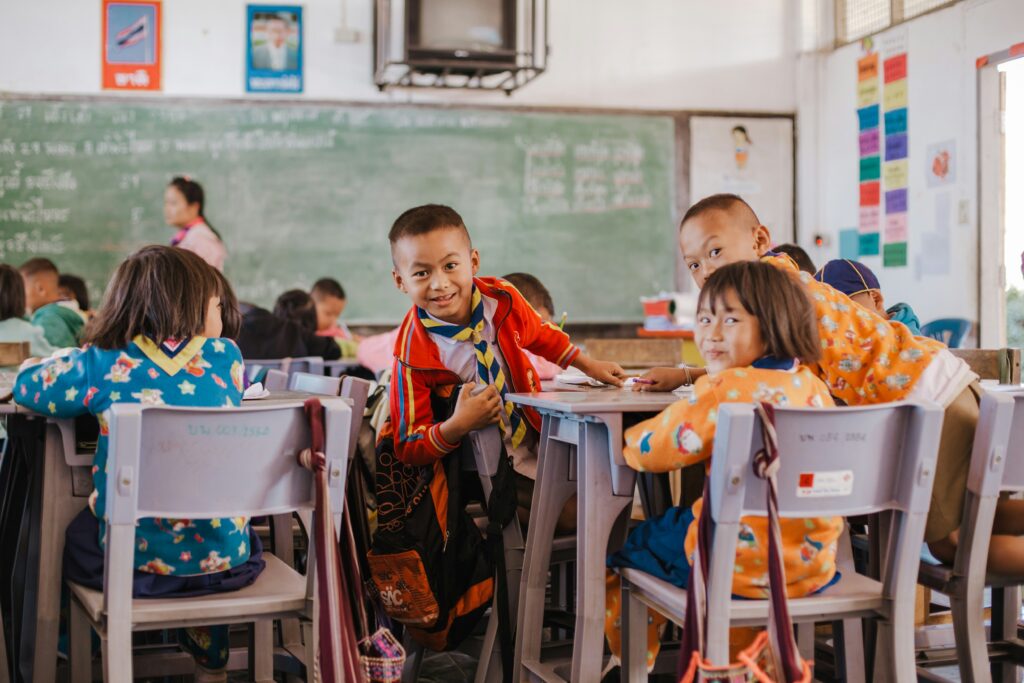
This is what it actually looks like. Real students, real classrooms, real first days.
FAQs: Teaching Abroad With No Experience
Q: Can I teach abroad with no teaching experience?
A: Yes — thousands of first-time teachers with no classroom experience land jobs abroad every year. Government programs like South Korea’s EPIK, Japan’s JET Program, and Spain’s Auxiliares are specifically designed for native English speakers without teaching experience. A bachelor’s degree and a TEFL certificate are the standard requirements.
Q: What qualifications do I need to teach abroad with no experience?
A: For most programs, a bachelor’s degree in any field plus a 120-hour TEFL certificate with observed teaching practice. The TEFL certificate compensates for the absence of classroom experience — it shows employers you’ve had real teaching experience and feedback. Native English proficiency and a clean background check are also standard requirements.
Q: Which country is easiest to teach English in with no experience?
A: South Korea’s EPIK program is the most structured and supportive entry point for first-time teachers — free housing, flight reimbursement, and a clear onboarding process. Spain’s Auxiliares de Conversación is the most lifestyle-friendly. Both are explicitly designed for teachers without prior classroom experience.
Q: Does a TEFL certificate make up for no teaching experience?
A: It helps significantly — particularly a 120-hour program with observed teaching practice, which gives you real classroom exposure and something concrete to discuss in interviews. It doesn’t fully replace experience, but it closes the gap enough to make most first-time applicants competitive for language school and government program positions.
Q: Will my first teaching job abroad be hard without experience?
A: The first few months of any teaching job abroad have a learning curve — and that’s true for experienced teachers too, because the context is different. Most first-time teachers describe their first year as the hardest and most rewarding of their lives. A quality TEFL course prepares you for the classroom. Flexibility, curiosity, and a willingness to ask for help carry you through the rest.
You Don’t Need to Have It All Figured Out Before You Go
Teaching abroad is one of those experiences that teaches you what you need to know by putting you in the middle of it. Even without experience to begin with, you will have the first year to build more real-world teaching skills than most credential programs — because you’re actually doing it, with real students, in a real school, in a real country.
Get the TEFL certificate. Volunteer somewhere local first if you can. Apply to programs designed for beginners. And go in knowing that the first placement is the beginning of the story, not the whole thing.
The free checklist walks through 38 steps from “thinking about it” to actually being there — degree or no degree, experience or no experience.
The Ultimate Teach Abroad Toolkit covers job search strategy, country comparisons, and what to expect in your first year in detail.