Can you teach abroad without a degree? Here’s what’s actually available — which countries, which programs, and what you need instead.
The most common advice online is that you need a bachelor’s degree to teach abroad. That’s mostly true — but not entirely.
Government programs and international schools do require a four-year degree, full stop. But those aren’t the only pathways into an overseas classroom. Language schools in several countries hire based on TEFL certification rather than degree requirements. Volunteer programs don’t require a degree. And some online teaching platforms accept TEFL certification alone.
You can teach abroad without a degree — but the options are narrower, the pay is lower, and the legal protections are fewer. Going in with clear eyes about what’s available and what isn’t will save you a lot of wasted applications and disappointment.
This guide covers what’s actually possible, which countries are most accessible, and what you need to make it work.

A quality TEFL certificate is your primary credential when you don’t have a degree. Make it count.
Where Can You Teach English Abroad Without a Degree?
Several countries allow foreign English teachers to work at private language schools without a bachelor’s degree, relying instead on TEFL certification and native English proficiency.
The most accessible markets include:
Southeast Asia — Thailand, Cambodia, and Myanmar have private language school markets where TEFL certification is the primary hiring credential. Thailand, in particular, has a high demand for English teachers and schools that prioritize certification and classroom presence over formal degrees. Our [INTERNAL LINK: /teach-english-in-thailand — “complete guide to teaching English in Thailand”] covers the full landscape.
Latin America — Colombia, Ecuador, Peru, and Mexico all have active private language school markets with varying degree requirements. Schools in these countries are generally more flexible than those in Europe or East Asia, and demand for native English speakers is consistent.
Central and Eastern Europe — Some private language schools in the Czech Republic and Poland hire based on TEFL certification, particularly smaller independent schools outside major cities. In the Czech Republic specifically, and possibly beyond, some preschools and young learner programs hire TEFL-certified teachers without a degree — particularly for positions working with very young children where native English exposure is the primary goal rather than formal academic instruction. This was the case for teachers living and working in Prague during my time there. Requirements vary significantly by employer — research each school individually before applying.
Online English teaching — Platforms like italki (a peer-to-peer tutoring marketplace) allow teachers to set their own rates and connect with students directly, with no degree requirement. Other platforms vary — always check individual requirements before registering.
What Do You Need Instead of a Degree?
A quality TEFL certificate becomes your primary credential when you don’t have a bachelor’s degree — and it needs to be credible.
The minimum standard that serious schools recognize is a 120-hour TEFL certificate with observed teaching practice — not just video modules. Providers like TEFL Worldwide Prague and International TEFL Academy offer in-person and accredited online courses that meet this standard. A certificate from an unrecognized provider won’t substitute for a degree in any meaningful way.
Beyond certification, most positions without degree requirements still expect:
- Native or near-native English proficiency — Most schools in this category specifically target native English speakers from the US, UK, Canada, Australia, New Zealand, Ireland, and South Africa
- Clean criminal background check — Required by most countries regardless of degree status
- Basic teaching skills — A TEFL course with classroom practice hours gives you a foundation; schools hiring without degrees are often taking more of a risk on you, and showing genuine preparedness matters
Which Teaching Abroad Pathways Are Closed Without a Degree?
Several of the most competitive and best-compensated teaching abroad pathways require a bachelor’s degree and are not accessible without one.
| Program/Destination | Degree Required? | Notes |
|---|---|---|
| EPIK — South Korea | Yes | Most require a degree for an employment visa |
| JET Programme — Japan | Yes | Required for all participating countries |
| Auxiliares — Spain | Yes | Required for NALCAP program |
| International schools (global) | Yes + teaching license | Degree plus home-country certification |
| UAE / Saudi Arabia | Yes | Work visa requires degree |
| China | Yes | Legal work visa (Z-visa) requires degree |
| Most EU work visa programs | Yes | Most require a degree for an employment visa (but there are exceptions) |
This isn’t meant to discourage — it’s meant to set accurate expectations. The programs that offer the best pay, strongest support structures, and most career credibility do require degrees. The no-degree pathway is real, but it’s a narrower road.
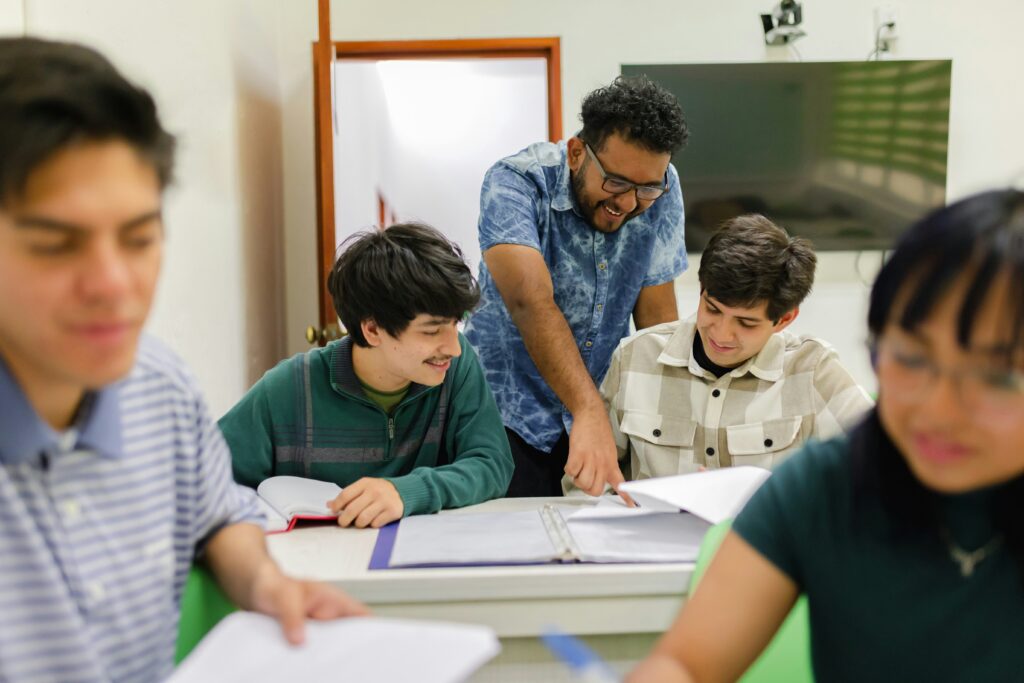
Private language schools are the most accessible entry point for teaching abroad without a degree.
What Are Volunteer Teaching Programs?
Volunteer teaching programs place English teachers in schools abroad in exchange for accommodation and meals — and most don’t require a bachelor’s degree.
Organizations like Worldpackers and Workaway connect volunteers with schools, community organizations, and language programs in exchange for a work trade arrangement. You typically teach a set number of hours per week in exchange for housing and food. Pay is minimal or nonexistent, but the barrier to entry is low.
Volunteer programs are best suited for people who want the experience of living and teaching abroad, are not primarily motivated by income, and want to build a CV before pursuing paid positions. According to Worldpackers’ teaching resources, volunteer placements are available across Latin America, Southeast Asia, and parts of Africa with no degree requirement.
Should You Get Your Degree While Teaching Abroad?
One of the most practical paths for teachers without degrees is to start in an accessible market, gain experience, and complete a degree online while teaching.
Many teachers do exactly this. You start at a private language school in Thailand or Colombia — gaining real classroom experience and living abroad — while completing an online bachelor’s degree through an accredited institution. Programs through institutions like Western Governors University (WGU), which offers competency-based online degrees, or the University of the People, a tuition-free, accredited online university, make this genuinely achievable while working full-time abroad.
Once you have both a degree and teaching experience, every door that was previously closed opens. International schools, government programs like EPIK and JET, and competitive European markets all become accessible. The combination of a degree and real-world teaching abroad experience is a genuinely strong CV — often stronger than a degree alone.
Another option worth considering: enrolling in a university abroad rather than completing an online degree from home. Tuition at public universities in Germany, Norway, and the Czech Republic is low or free for international students — including non-EU citizens in some cases. For example, most public German universities charge no tuition, only a semester administrative fee of €150–€350. Teaching part-time at a language school while enrolled as a full-time student is a path some teachers take — you build your degree, your teaching experience, and your life abroad simultaneously. It’s not a simple path logistically, but for the right person, it’s an extraordinarily efficient use of a few years.
See our comparison of the best countries to teach abroad to understand which markets offer the best starting points for building that experience.
Is Teaching Abroad Without a Degree Legal?
Whether you can legally work as a teacher abroad without a degree depends on the country’s visa requirements — and this is where the no-degree pathway gets complicated.
In Thailand, for example, a bachelor’s degree is technically required for a legal Non-Immigrant B work visa. Some language schools hire teachers without degrees on tourist visa runs — moving in and out of the country to reset visa status — but this is legally precarious and not sustainable in the long term. Similar situations exist in other Southeast Asian countries.
The practical reality: some schools in degree-flexible markets will hire without a degree and navigate the visa situation informally. This puts the legal risk on you, not the school. Working illegally in a foreign country — even in a school — carries real consequences, including fines, deportation, and future entry bans.
The cleanest path is to research the specific visa requirements of your target country, find employers who are transparent about the legal arrangement, and understand exactly what you’re agreeing to before you arrive.

Young learner positions — like preschools in Prague — are often the most accessible entry point for teachers without a degree.
FAQs: Teaching Abroad Without a Degree
Q: Can I teach English abroad without a bachelor’s degree?
A: Yes — but your options are more limited. Private language schools in Thailand, Cambodia, Colombia, Ecuador, Peru, Mexico, and some Eastern European countries hire based on TEFL certification rather than degree requirements. Government programs like EPIK, JET, and Auxiliares de Conversación all require a bachelor’s degree and are not accessible without one.
Q: What do I need to teach abroad without a degree?
A: A quality 120-hour TEFL certificate with observed teaching practice is essential — this becomes your primary credential. Native or near-native English proficiency, a clean criminal background check, and genuine classroom readiness are also expected. A certificate from an unrecognized provider won’t substitute meaningfully for a degree.
Q: Which country is easiest to teach English in without a degree?
A: Thailand and Cambodia have the most accessible private language school markets for teachers without degrees in Southeast Asia. In Latin America, Colombia, Ecuador, and Mexico offer similar flexibility. Note that legal work visa requirements in some of these countries still technically require a degree — research the specific legal situation before committing. In addition, in some countries, they hire TEFL-certified teachers to work at early childhood centers without a degree. These are more immersion-based models vs formal instruction.
Q: Can I teach English online without a degree?
A: Some platforms allow it. Italki — a peer-to-peer tutoring marketplace — has no degree requirement and allows teachers to set their own rates and schedule. Other platforms like VIPKid have historically required degrees. Always check individual platform requirements before registering, as policies change.
Q: Is it worth getting a degree to teach abroad?
A: If you’re serious about teaching abroad long-term — yes. A degree unlocks government programs, international schools, and the most competitive teaching markets. One practical path is to start teaching abroad without a degree in an accessible market while completing an online degree through an accredited institution, then transition to higher-paying positions once you have both.
The Bottom Line on Teaching Abroad Without a Degree
The no-degree pathway is real — but it’s narrower, less protected, and lower-paying than the full pathway. Go in knowing that.
If you’re in a position where a degree isn’t currently possible, start where the doors are open. Gain real experience. Build a strong TEFL credential. Consider pursuing an online degree while you’re abroad. The experience you build during that time is genuinely valuable — and it compounds over time into a CV that opens doors a fresh degree alone wouldn’t.
The free checklist walks through the full sequence of steps to get from “thinking about it” to actually teaching abroad — with or without a degree.