
Reverse culture shock — the disorientation of coming home after living abroad — is real, common, and often harder than the original adjustment. Everyone prepares for the culture shock of going abroad. Almost nobody prepares for the shock of coming home.
You expect the adjustment to go in one direction — from familiar to unfamiliar. What most people don’t expect is that the return trip is often harder. The disorientation is quieter, more confusing, and lonelier — because nobody around you can quite understand why home doesn’t feel like home anymore.
Reverse culture shock — the psychological adjustment of returning to your home country after living abroad — affects the majority of people who spend a year or more overseas, according to research published by the US State Department guidance on reverse culture shock and reentry. It is real, common, and worth preparing for.
This guide covers what to expect, why it happens, and how to actually get through it.

Home looks the same. You don’t.
What Does Reverse Culture Shock Actually Feel Like?
Reverse culture shock feels like being a stranger in a place that is supposed to be yours. You come home expecting comfort and familiarity. Instead, things feel subtly wrong — the pace too fast, the conversations too shallow, the daily concerns of the people around you oddly disconnected from anything that feels important.
You feel restless in a way you can’t quite name. The routine that used to feel normal now feels limiting. You miss the version of yourself that existed abroad — more adaptable, more present, more alive to the world around you.
This is not being dramatic. Researchers call this “reentry shock” — and it tends to follow a recognizable pattern. The initial relief of being home gives way to irritability and withdrawal, which eventually resolves into gradual reintegration. The adjustment takes three to six months for most people, according to the study abroad research compiled by StudyAbroad.com.
Why Does Coming Home Feel So Disorienting?
Reverse culture shock happens because you changed — but home didn’t. When you live abroad, your perspective shifts in ways that are hard to fully articulate. Your tolerance for discomfort increases. Your definition of “normal” expands. You develop a new relationship with time, with strangers, with daily life.
You come home as a genuinely different person. But the environment you return to has stayed exactly the same.
The people who love you didn’t have the same experience. They can’t fully understand what you went through, and you can’t fully explain it — not in a way that lands. This creates a subtle loneliness that is one of the hardest parts of coming home. It’s not that your relationships are broken. There’s a gap between your inner life and the world around you, and it takes time to close.
The Most Common Reverse Culture Shock Symptoms
Most people experience some combination of the following after returning from a long stint abroad:
- Restlessness and boredom — daily life at home feels flat compared to the novelty and stimulation of living somewhere new
- Irritability — small frustrations feel outsized; you find yourself annoyed by things that never bothered you before
- Social withdrawal — you pull back from friends and family because conversations feel like they’re happening in a different language
- Idealization — you remember life abroad as better than it actually was, and home as worse than it actually is
- Identity confusion — you’re not sure where you fit anymore, or who you are now that the adventure is over
- Grief — a genuine sense of loss for the life, the community, and the version of yourself you left behind
These are normal responses to a significant transition. They don’t mean something is wrong with you. They mean you did something significant — and your mind is catching up.
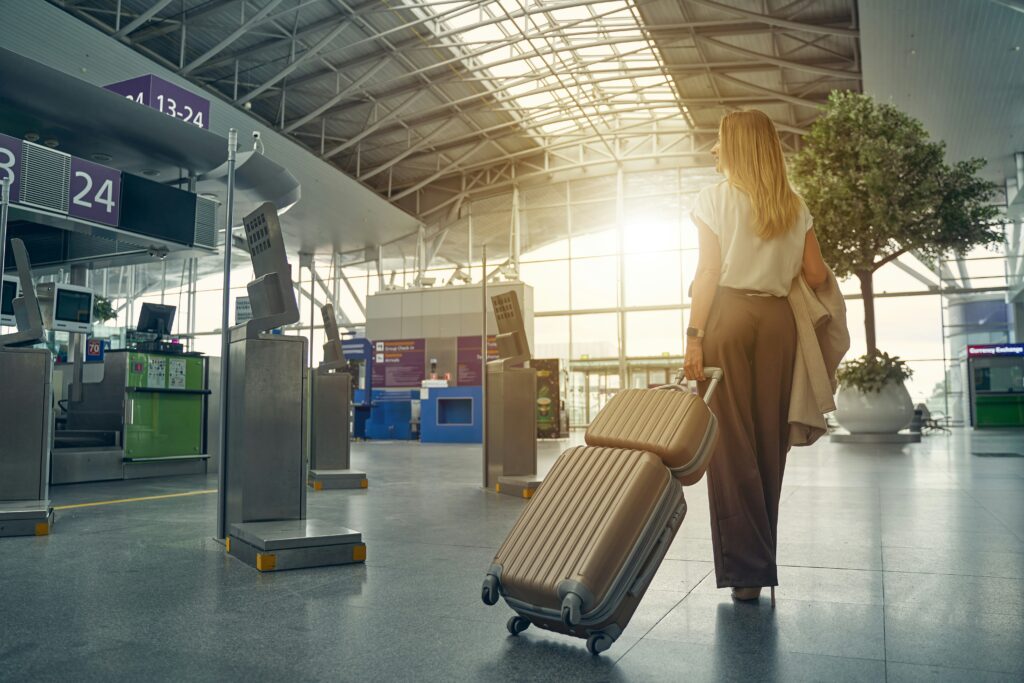
The flight home is the easy part.
How to Handle Reverse Culture Shock: What Actually Helps
Give yourself time — and lower your expectations for the first few months. Don’t expect to feel like yourself on day one. Don’t measure your adjustment against how quickly you settled in abroad. Coming home is a transition, and transitions take time.
Stay connected with your community abroad. The friends you made abroad understand what you’re going through in a way that nobody at home can fully match. These relationships are worth maintaining. Regular video calls, group chats, and shared trip planning keep the community alive.
Don’t idealize the experience. It’s tempting to remember living abroad as uniformly wonderful and home as uniformly disappointing. The reality is more complicated — living abroad had hard days, homesick weeks, and things you genuinely didn’t love. Keeping a balanced perspective helps. Journaling about both the highlights and the difficult moments before you leave is one of the most practical things you can do.
Find your next thing. Reverse culture shock tends to be worse when you feel like the adventurous chapter of your life is over. It doesn’t have to be. Whether that’s planning a return trip, a new domestic adventure, or simply applying what you’ve learned to building a different kind of life at home, having something to move toward makes the landing easier.
Talk to people who’ve been through it. Returned expats and teaching abroad alumni understand what you’re navigating in a specific, practical way. Find them through alumni networks, Facebook groups for returned teachers, or communities like Internations and InterExchange Alumni.
What to Do With the Person You’ve Become
Living abroad changes you in ways that are worth documenting and building on — not just processing and leaving behind. The adaptability, the cross-cultural communication skills, the comfort with ambiguity, the expanded worldview — these are real assets that belong in your life going forward, not just in a scrapbook.
Think about what you learned about yourself. About how you want to live. About what actually matters to you. These are not small things. They are the whole point.
Some people come home and find that the experience clarifies exactly what they want their life at home to look like. Others come home and realize they want to go back abroad — that teaching internationally isn’t a gap year but a career. Both are completely valid outcomes.
If you’re thinking about going back — or still deciding whether to go in the first place — see our Guide to the best countries to teach abroad for first-timers and our Honest breakdown of what teaching in Prague is actually like.

The hardest conversations after coming home are the ones nobody else can quite follow.
FAQs: Reverse Culture Shock
Q: Is reverse culture shock normal?
A: Yes — it’s extremely common. Research consistently shows that the majority of people who live abroad for a year or more experience some degree of reentry shock when they return home. It doesn’t mean anything is wrong with you or that your experience abroad went badly. It means you were genuinely changed by it.
Q: How long does reverse culture shock last?
A: For most people, the acute phase lasts two to three months, with full reintegration taking three to six months. The timeline varies based on how long you lived abroad, how immersed you were in daily life there, and the quality of support you have at home.
Q: Why do I feel lonely after coming home, even though I’m surrounded by people I love?
A: This is one of the most common — and hardest — parts of reverse culture shock. The people who love you didn’t have the same experience. They can’t fully understand what you went through, which creates a gap that takes time to bridge. Staying connected with others who’ve lived abroad helps significantly.
Q: What’s the best thing I can do to prepare for reverse culture shock before I come home?
A: Journal about your experience before you leave — the hard parts as well as the good ones — so you have an honest record to return to. Identify two or three people in your abroad community you’ll stay in regular contact with. And set realistic expectations: plan for an adjustment period rather than assuming you’ll snap back into your old life immediately.
Q: Will I ever feel fully at home again?
A: Yes — though “home” may mean something different than it did before. Most returning expats eventually reach a new equilibrium that incorporates both their home culture and their experience abroad. Some people find that living abroad permanently expands their sense of belonging.
Coming Home Is Part of the Experience
Reverse culture shock is not a sign that you made a mistake. It’s a sign that what you did mattered — that you were genuinely changed by it.
The disorientation fades. The restlessness settles. What stays is the perspective, the adaptability, and the knowledge that you are capable of more than you thought.
Give yourself time. Stay connected. And don’t close the door on what comes next.
If you’re still in the planning stages and want to make sure you go in prepared for the experience and the return — the Ultimate Teach Abroad Toolkit covers both, including a full section on coming home and reintegrating everything you learned.
Get the Ultimate Teach Abroad Toolkit →
Not ready for the full toolkit yet? Start with the free checklist.