
Want to teach English in Prague? Here’s what the job market, salary, visa process, and daily life actually look like — from a teacher who lived it.
While everyone fights over placements in Spain and Italy, teachers who choose Prague consistently say it exceeded every expectation.
Prague offers the best salary-to-cost ratio of any English teaching market in Europe — and one of the most rewarding teaching experiences you will find anywhere. The city is stunning, the students are motivated, and the lifestyle is genuinely extraordinary.
I taught English in Prague halfway through my career. I took a TEFL course there, taught young children at a language school, gave 1:1 lessons to an adult, and built a life I still think about. This guide gives you the honest picture — jobs, salary, visa, and what daily life actually looks like.
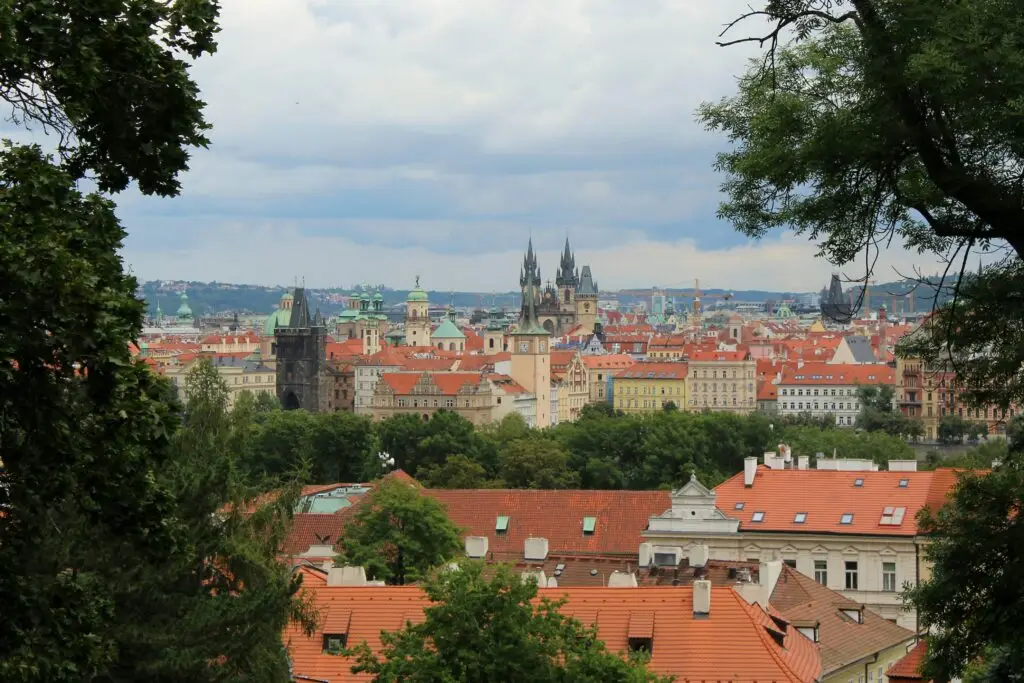
The Prague skyline from above — the city that teachers who choose to teach English in Prague get to call home.
The English Teaching Job Market in Prague
Prague’s English-teaching market is divided into four main sectors: private language schools, corporate English training, bilingual schools, and private tutoring. Language schools — called jazykové školy in Czech — are the primary employers and the most accessible entry point for new teachers.
Czech professionals are highly motivated English learners. EU membership and international business have made English proficiency essential for career advancement, which means your students actually want to be in your classroom. That alone makes Prague more rewarding than many other markets.
Corporate English is a growing sector. Many teachers build a portfolio of company clients in Prague’s business district, earning 25 to 50 dollars per hour. This route requires self-employment registration as a živnostník — a Czech trade license holder — but gives you the freedom to work with multiple clients.
Bilingual and international schools following IB (International Baccalaureate) or Cambridge curricula also exist in Prague. These are highly competitive and require full teaching credentials, but offer excellent conditions and structured career progression.
The difference between international schools and language schools before you apply
What Qualifications Do You Need to Teach English in Prague?
For language school positions in Prague, you need a TEFL or CELTA certification of at least 120 hours and, in most cases, a bachelor’s degree. The degree requirement is tied to the Czech work permit process rather than the school’s preference — without it, securing legal work authorization is significantly harder.
Bridge TEFL is an online-only program that lets you earn your certification before you leave the US — a strong option if you want to arrive job-ready.
Corporate English freelance work requires the same credentials plus živnostník registration. Private tutoring has no formal requirements, but TEFL certification gives parents and clients confidence in your credentials.
One note for credentialed US teachers: your state teaching license and classroom experience are genuine advantages in Prague’s bilingual and international school market. Do not underestimate what 21 years in a US classroom is worth when you walk into an interview abroad.
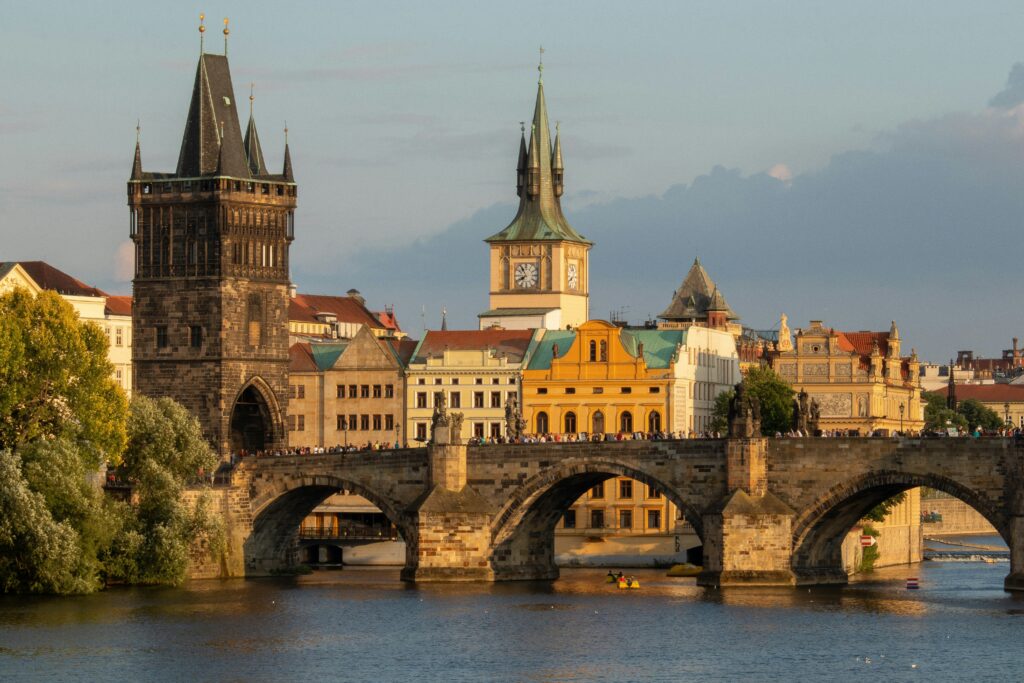
Charles Bridge — one of Prague’s most iconic landmarks and part of your daily backdrop when you teach English in Prague.
Salary and Savings: What Can You Actually Earn in Prague?
Teaching English in Prague pays 1,200 to 2,000 dollars per month at language schools — and the cost of living is low enough that those numbers go significantly further than they sound.
Prague offers the best salary-to-cost ratio of any English teaching market in Europe. It is not Korean money, but among European options, it is the clear winner for teachers who want to save.
| Position | Monthly Earnings (USD) |
|---|---|
| Language school teacher | $1,200 – $2,000 |
| Corporate English freelancer | $2,000 – $3,500 |
| Bilingual/international school | $1,800 – $3,000 |
| Private tutoring (supplement) | $25 – $50/hour |
A realistic monthly budget in Prague:
| Expense | Monthly Cost (USD) |
|---|---|
| Rent in shared flat | $400 – $550 |
| Groceries | $180 – $250 |
| Monthly transport pass | ~$30 |
| Dining out and socializing | $100 – $180 |
| Weekend travel | $80 – $150 |
| Total | $790 – $1,160 |
Bottom line: A language school teacher earning $1,500 per month can save $300 to $700 monthly while living comfortably — more if they add private tutoring clients.
The Visa Process for US Teachers in Prague
US citizens need a Type D long-stay visa or residence permit to work legally in the Czech Republic. EU freedom of movement does not apply to US passport holders — this is the most important logistical reality to plan around before you commit to anything.
The most common route is employer sponsorship. Your Czech employer files for a work permit on your behalf with the Czech Labor Office (Ministerstvo práce a sociálních věcí). Once approved, you apply for the long-stay visa at the Czech consulate in the US before you depart.
Alternatively, teachers who want to work independently can register as a živnostník (Czech trade license holder). This route is more complex but gives you the freedom to work with multiple employers without a single sponsor.
On arrival, register at your local Foreigners Police office (Cizinecká policie) within three days. This is a legal requirement — not optional.
What Is Daily Life Like Teaching English in Prague?
Daily life in Prague is genuinely extraordinary — one of Europe’s most beautiful and most walkable cities, with a thriving expat community, world-class culture, and some of the most affordable urban living on the continent.
The food is hearty, affordable, and delicious. Czech cuisine — svíčková (beef sirloin in cream sauce), guláš, smažený sýr (fried cheese) — is Central European comfort food at its finest. Czech beer, including Pilsner Urquell, Kozel, and Bernard, is widely considered among the world’s finest and costs around 2 dollars a half-liter. Learning to say “Jedno pivo, prosím” (one beer, please) will serve you well.
The pub — called a hospoda in Czech — is the center of social life. It is where friendships form, where locals unwind, and where you will spend many of your best evenings in Prague.
Prague’s public transport network is comprehensive and cheap — a monthly pass costs around 30 dollars and covers trams, metro, and buses across the entire city. Prague Integrated Transport Authority
Czech Culture, Festivals, and What Teachers Experience
Prague’s cultural calendar is rich and deeply tied to seasons and local traditions — and as a teacher living there, you experience these alongside locals rather than as a tourist passing through.
Easter (Velikonoce) is celebrated very differently from how it is in the US. On Easter Monday, Czech men and boys traditionally, playfully whip women and girls with decorated willow branches called a pomlázka — a folk tradition meant to bring youth and vitality. Women give decorated eggs, sweets, or a shot of Slivovitz in return. It sounds alarming until you see it — cheerful, playful, and genuinely unlike anything you have experienced.
The Christmas Markets (Vánoční trhy) at Old Town Square and Wenceslas Square are among the best in Europe. From late November through Christmas, wooden stalls sell svařák (mulled wine), trdelník (chimney cake), and handmade ornaments beneath Gothic towers.
Other highlights include the Burning of the Witches (Pálení čarodějnic) on April 30th — bonfires lit across the country to mark the end of winter — and the Prague Spring International Music Festival (May/June), one of Europe’s premier classical music events, opening annually with a performance of Smetana’s Má vlast.
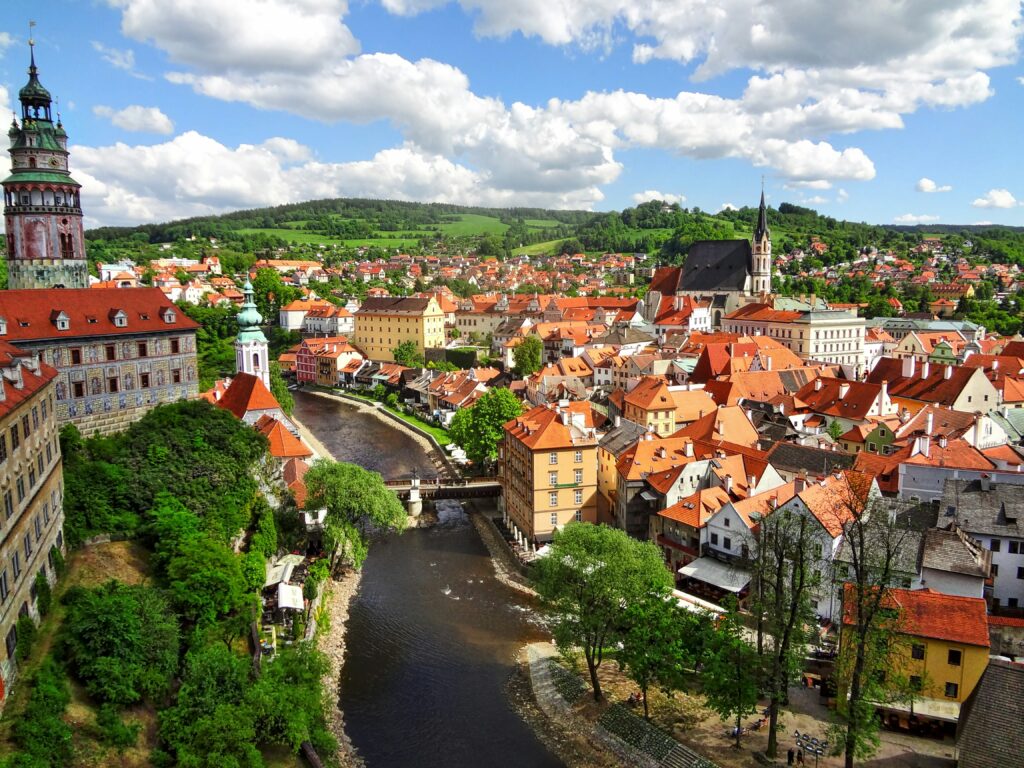
Český Krumlov — one of the easiest and most beautiful day trips from Prague, just three hours south by train or bus.
Weekend Travel from Prague
Prague is one of Europe’s best bases for weekend travel — five major cities are within five hours by train, making every Friday the start of a potential new adventure.
| Destination | Travel Time |
|---|---|
| Dresden | 2 hours by train |
| Vienna | 4 hours by train |
| Berlin | 4.5 hours by train |
| Kraków | 4.5 hours by train |
| Budapest | 6 hours by train |
My favorite day trip from Prague was Český Krumlov — a fairytale UNESCO-listed town about three hours south by train or bus. In winter, with snow on the castle, it is genuinely magical.
Teaching English in Vienna, if you want to compare Central European options
The Honest Challenges of Teaching in Prague
Prague is extraordinary — but US teachers should go in with eyes open about three real challenges.
Czech is one of Europe’s hardest languages. Daily life outside tourist areas requires at least basic Czech — greetings, numbers, transport, and grocery shopping. The social integration curve is steeper than in Spain or Italy. That said, even a handful of phrases transforms how locals receive you.
Winters are long, dark, and cold from November through February. I can personally attest to this — if you are sensitive to seasonal darkness, invest in a light therapy lamp before you leave and plan trips south during the worst months.
My Experience Teaching English in Prague
I moved to Prague after 8 years in US classrooms — and the city blew me away almost immediately.
I began with a TEFL course put on by the Czech government, which no longer exists in its original form. From there, I got a position at a language school teaching two-and-a-half to five-year-olds in the mornings, with a class size of around five students. In the afternoons, I returned to teach nine- and ten-year-olds, with just two students in that class.
Overall, I worked around 29 hours per week. In addition, I taught private conversational English to a Czech man once a week — 1:1 meetups that quickly became one of my favorite parts of the job.
The class sizes alone made the move worth it. After years of overcrowded US classrooms, teaching five students at a time reminded me why I became a teacher in the first place. Beyond the classroom, I fell in love with the food, spent hours in Letná Park, rooted for Slavia Praha, and traveled extensively across the Czech Republic and Central Europe.
It took time to find my people and to feel comfortable with public transport and my limited Czech. But Prague is ultimately a place that will always have a piece of my heart.
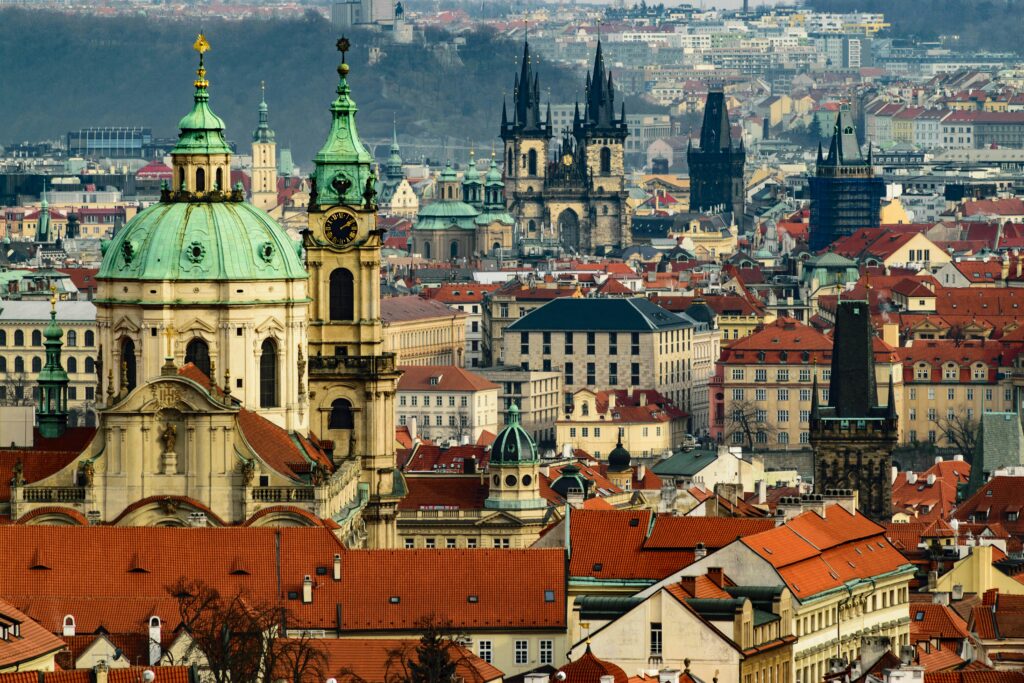
Prague’s Malá Strana district — the kind of view that makes teaching English in Prague feel like the best decision you ever made.
FAQs: Teaching English in Prague
Q: Do I need a TEFL certificate to teach English in Prague?
A: Yes — for many language school positions in Prague, a TEFL or CELTA certification of at least 120 hours is standard, and many schools require it. A bachelor’s degree is also typically required for legal work authorization. Bridge TEFL offers an accredited online program you can complete before leaving the US.
Q: How much do English teachers earn in Prague?
A: Language school teachers earn approximately $1,200–$2,000 per month. Corporate English freelancers earn $2,000–$3,500, depending on client load. With a monthly cost of living of around $790–$1,160, Prague offers the best savings potential of any English-teaching market in Europe.
Q: Can US citizens teach English in Prague legally?
A: Yes, but US citizens need a Type D long-stay visa and work permit — EU freedom of movement does not apply. The most common route is employer sponsorship through a Czech language school. Teachers who want to work independently can register as živnostníci (Czech trade license holders).
Q: Is Prague a good city for teachers who want to save money?
A: Prague offers the best salary-to-cost ratio in Europe for English teachers. A language school salary of $1,500 per month leaves $300–$700 in monthly savings after a comfortable lifestyle, more with private tutoring income on the side.
Q: What is daily life like for English teachers in Prague?
A: Excellent. Prague is walkable, affordable, and culturally rich. A monthly transport pass costs around $30. Czech beer is $2 a glass. Weekend travel to Vienna, Berlin, and Kraków is easy and cheap. The expat and teacher community is strong, and the city’s beauty makes everyday life genuinely enjoyable.
Is Prague Right for You?
Prague is the right choice if you want a stunning city, motivated students, strong savings potential, and Central European travel on a budget that actually works.
It suits teachers who want the European experience without the financial stress — and who are willing to embrace a harder language and a proper winter in exchange for one of the most rewarding teach abroad destinations on earth.
If Prague sounds like your city, start here.
Get the Teach in Europe Guide — Prague and the Czech Republic are covered in full, alongside six other European teaching destinations.
Grab the free checklist— your quick-start resource to make sure you have the essentials covered before you apply.