
Want to teach English in Vienna? Here’s what the job market, visa process, salary, and daily life actually look like for US teachers.
Vienna is one of the most livable cities in the world — and one of Central Europe’s strongest markets for English teachers.
It is also more complex than Prague or Warsaw. The visa process takes longer, the cost of living is higher, and some employers prefer EU candidates. But for teachers who go in prepared, Vienna offers earning potential and a quality of life that is genuinely hard to match.
I taught at a language school in Prague, and Vienna came up constantly in conversations with other teachers — always with the same mix of admiration and caution. This guide gives you the honest picture so you can decide if it is the right fit before you apply to a single job.

Vienna’s city center — the Vienna State Opera sits at the heart of one of Europe’s most walkable and culturally rich cities.
The English Teaching Job Market in Vienna
Vienna’s English teaching market is built on four sectors: corporate Business English, private language schools, international schools, and university programs. Of these, corporate training is the most lucrative — and the most in-demand.
Vienna is Austria’s business capital and home to major international organizations, including the United Nations, OPEC, and the OSCE (Organization for Security and Co-operation in Europe). As a result, that concentration of global business drives strong, consistent demand for professional English training.
Freelance Business English trainers in Vienna earn 30 to 60 euros per hour — among the highest rates in Central Europe. Although building a corporate client base takes three to six months, teachers who establish themselves here often out-earn their language school counterparts significantly.
In addition, private language schools — called Sprachschulen — like Berlitz and Inlingua hire qualified English teachers year-round. These positions offer stable income and predictable schedules, though at lower hourly rates than corporate freelance work.
Finally, international schools including the Vienna International School and the American International School require a full teaching license and significant classroom experience, but offer excellent salary packages with housing allowances.
What Qualifications Do You Need to Teach English in Vienna?
For language school positions in Vienna, you need a TEFL or CELTA certification (minimum 120 hours) and a bachelor’s degree. Corporate freelance work requires the same credentials, plus a Gewerbeschein — the Austrian trade license required for self-employment.
Language school requirements:
- TEFL or CELTA certification (120 hours minimum)
- Bachelor’s degree
- Native or near-native English proficiency
- Valid work authorization
Business English freelance requirements:
- TEFL or CELTA certification
- Bachelor’s degree
- A professional or business background is a significant advantage
- Gewerbeschein (Austrian trade license for self-employment)
International school requirements:
- Bachelor’s degree in education or a subject area
- Valid state teaching license
- Two to five years of classroom experience minimum
One important note: Bridge TEFL is an online-only program — a strong option if you want to earn your certification before you leave the US.
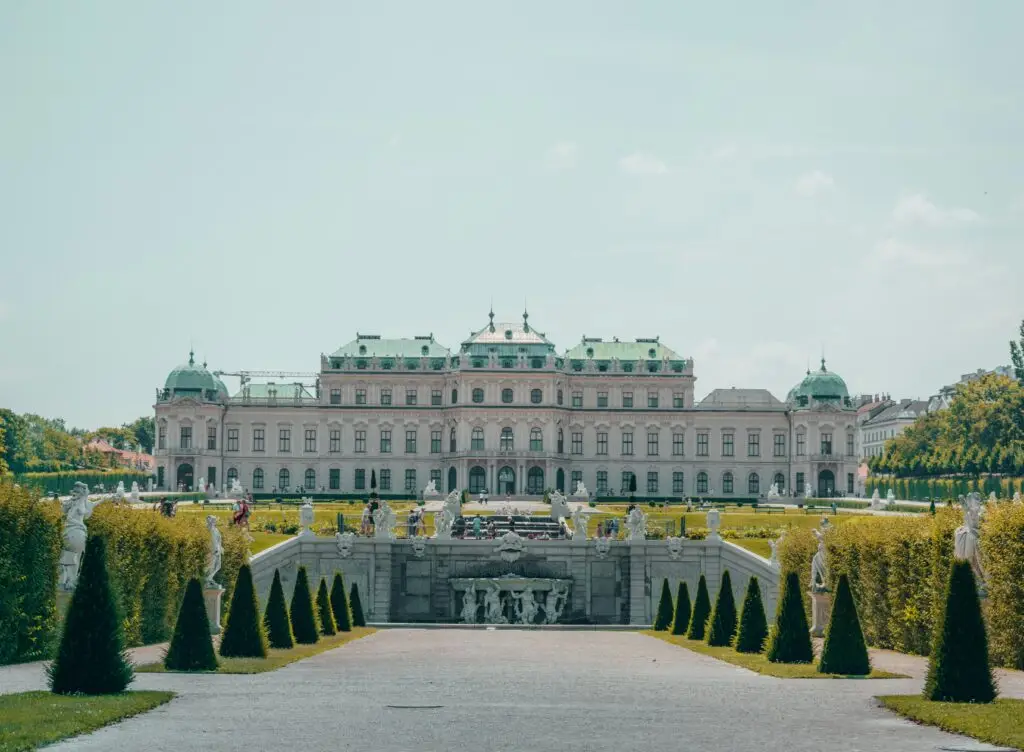
The Upper Belvedere Palace is one of Vienna’s most iconic landmarks and is a short walk from the city center. This is the kind of city you get to call home.
Salary and Savings: What Can You Actually Earn in Vienna?
Vienna pays better than Prague or Warsaw, but costs significantly more to live in. Savings potential depends almost entirely on whether you land corporate clients or stay at the language school rate.
Here is what teachers realistically earn:
| Position | Monthly Earnings (USD) |
|---|---|
| Language school teacher | $1,500 – $2,500 |
| Freelance Business English trainer | $2,000 – $4,000 |
| International school teacher | $2,500 – $4,500 + benefits |
Monthly living costs in Vienna:
| Expense | Monthly Cost (EUR) |
|---|---|
| Room in shared apartment | €700 – €1,000 |
| Studio apartment | €1,000 – €1,500 |
| Groceries | €250 – €350 |
| Annual transit pass (Jahreskarte) | €365/year (€1/day) |
| Mid-range restaurant meal | €12 – €20 |
| Coffee house Melange | €4 – €5 |
| Total monthly estimate | €1,400 – €2,000 |
Vienna’s annual Jahreskarte transit pass — €365 for unlimited travel on the U-Bahn, trams, buses, and night lines — is one of the best-value public transport passes in Europe.
Bottom line: Language school teachers will cover expenses comfortably but save modestly. Freelance Business English trainers with a solid client base can save meaningfully.
The Visa Process for US Teachers in Vienna
US citizens need employer-sponsored work authorization to teach legally in Austria — and the process takes two to four months minimum. This is the most significant logistical challenge of teaching in Vienna and requires careful planning well in advance.
The most common route is the Rot-Weiß-Rot-Karte (Red-White-Red Card) — Austria’s points-based work permit. Your employer applies on your behalf to the Austrian immigration authorities. The card permits you to live and work in Austria for one year, renewable annually. Requirements include a job offer, proof of qualifications, proof of accommodation, and financial documentation.
Teachers who want to work independently as freelance Business English trainers can apply for a freelance visa and register a Gewerbeschein. Austrian bureaucracy is thorough — hiring a local tax advisor or immigration consultant is strongly recommended for this route.
One critical factor for US teachers: EU freedom of movement does not apply to US citizens. As a result, European nationals have a significant advantage because they require no visa sponsorship. In fact, some Austrian language schools actively prefer EU candidates for this reason. Therefore, target schools with a track record of hiring non-EU teachers, and prioritize securing a job offer before you arrive.
What Is Daily Life Like Teaching English in Vienna?
Daily life in Vienna is genuinely exceptional — the city consistently ranks among the world’s most livable cities, and living there makes that clear. — According to Mercer’s Quality of Living rankings, Vienna has held the top spot multiple times.
The coffee house culture alone is worth the move. Viennese coffee houses are UNESCO-listed cultural heritage — not just places to drink coffee, but institutions where you read, write, meet friends, and sit for as long as you wish without being asked to leave. A Melange (Viennese coffee with milk) and Apfelstrudel for around 10 euros buys you a table for the afternoon. As a teacher with lesson plans to write, this is one of the great working environments in the world.
Vienna’s musical heritage is unmatched anywhere in Europe. Mozart, Beethoven, Schubert, Brahms, Mahler, and Strauss all lived and worked here. Standing room tickets at the Vienna State Opera cost 4 euros — one of the great cultural bargains on the continent.
The Naschmarkt — Vienna’s famous open-air market running along the Wienzeile canal — has 120 stalls selling Austrian cheese, wine, Turkish spices, and Japanese street food. Eating well in Vienna is not cheap, but it is extraordinary.
Weekend Travel from Vienna
Vienna is one of Europe’s best bases for weekend travel — six capital cities are within four hours by train. This is one of the underrated reasons teachers choose Vienna over other Central European cities.
| Destination | Travel Time |
|---|---|
| Bratislava | 1 hour by train |
| Budapest | 2.5 hours by train |
| Salzburg | 2.5 hours by train |
| Prague | 4 hours by train |
| Ljubljana | 3.5 hours by train |
| Venice | 5 hours by train |
Teaching English in Prague, if you want to compare Central European options

The Graben — Vienna’s famous pedestrian street, and one of the most beautiful places to simply walk on a weekday afternoon.
The Honest Challenges of Teaching in Vienna
Vienna is an extraordinary city to teach English abroad in— but teachers should go in with clear eyes about three real challenges.
Cost of living is real. Vienna is significantly more expensive than Prague, Warsaw, or Lisbon. Language school teachers need to budget carefully and may find savings more limited than expected.
Visa complexity for US citizens. The work authorization process is slower and more bureaucratic than in the Czech Republic or Poland. Some employers are reluctant to sponsor non-EU candidates — factor this into your job search strategy early.
Austrian professional culture is formal. First names are not assumed in professional settings, and hierarchy matters more than in the US. This is an adjustment, but adapting to it is ultimately part of the experience.
Winters are cold and grey from November through February. Vienna’s Christmas markets are some of Europe’s finest, but if you need sunshine year-round, Vienna is not your city.
Before You Go: Practical Checklist
Protecting your US teaching job before you sign anything
- Finances: Set up your Charles Schwab debit card before you leave — zero ATM fees anywhere in Austria or on weekend trips across Europe.
- Health insurance: Confirm your expat coverage before you arrive.
- Packing: Plan for cold winters and pack a universal travel adapter.
The complete packing list for teaching abroad
FAQs: Teaching English in Vienna
Q: Do I need a TEFL certificate to teach English in Vienna?
A: Yes — for language school positions in Vienna, a TEFL or CELTA certification of at least 120 hours is standard. Business English freelance work and international school positions require the same, plus additional credentials. Bridge TEFL offers an accredited online program you can complete before leaving the US.
Q: Can US citizens teach English in Vienna without a visa?
A: No. US citizens need work authorization to teach legally in Austria. The most common route is the Rot-Weiß-Rot-Karte (Red-White-Red Card), sponsored by your employer. The process takes a minimum of two to four months — start early.
Q: How much do English teachers earn in Vienna?
A: Language school teachers earn approximately $1,500–$2,500 per month. Freelance Business English trainers with a solid corporate client base earn $2,000–$4,000 per month. International school teachers earn $2,500–$4,500 plus benefits, including housing allowances.
Q: Is Vienna expensive for English teachers?
A: More expensive than Prague or Warsaw. A comfortable lifestyle costs €1,400–€2,000 per month. Language school teachers cover expenses comfortably but save modestly. Corporate freelance trainers with strong client loads can save meaningfully.
Q: Is Vienna a good city for teachers who love culture and travel?
A: Yes — Vienna is exceptional for both. Standing room at the Vienna State Opera costs 4 euros. Six capital cities are within four hours of each other by train. The coffee house culture, food markets, and classical music scene make everyday life genuinely rich.
Is Vienna Right for You?
Vienna is the right choice for your teach abroad journey if you want imperial grandeur, world-class culture, and a city that takes quality of life more seriously than almost anywhere else in Europe.
In particular, it suits teachers who are serious about earning well through Business English, who love classical music and coffeehouse culture, and who want Central European travel without the budget-travel aesthetic of Prague.
On the other hand, it is not the right choice if saving money is your primary goal, if you need year-round sunshine, or if the complexity of the Austrian visa feels like more than you want to manage right now.
If Vienna sounds like your city, go ahead and start with the resources below.
Get the Teach in Europe Guide— everything you need to navigate the job market, visa process, and first months abroad across European teaching destinations.
Grab the free checklist— a quick-start resource to make sure you have the essentials covered before you apply.