
Teach English in Greece: Jobs, Salary & Honest Guide
Want to teach English in Greece? Here’s what the job market, salary, visa process, and daily life actually look like for US teachers.
Ancient history, extraordinary food, crystal-clear water, and 227 inhabited islands — Greece is one of the most atmospheric places in the world to spend a year teaching English.
Greece sits at the crossroads of Europe, Asia, and Africa, and it has a well-established private English-language school market that generates consistent year-round demand for native English teachers. The pay is modest, but the lifestyle is extraordinary.
This guide covers everything US teachers need to know before they go — the job market, salary, visa process, and what daily life in Greece actually looks like.
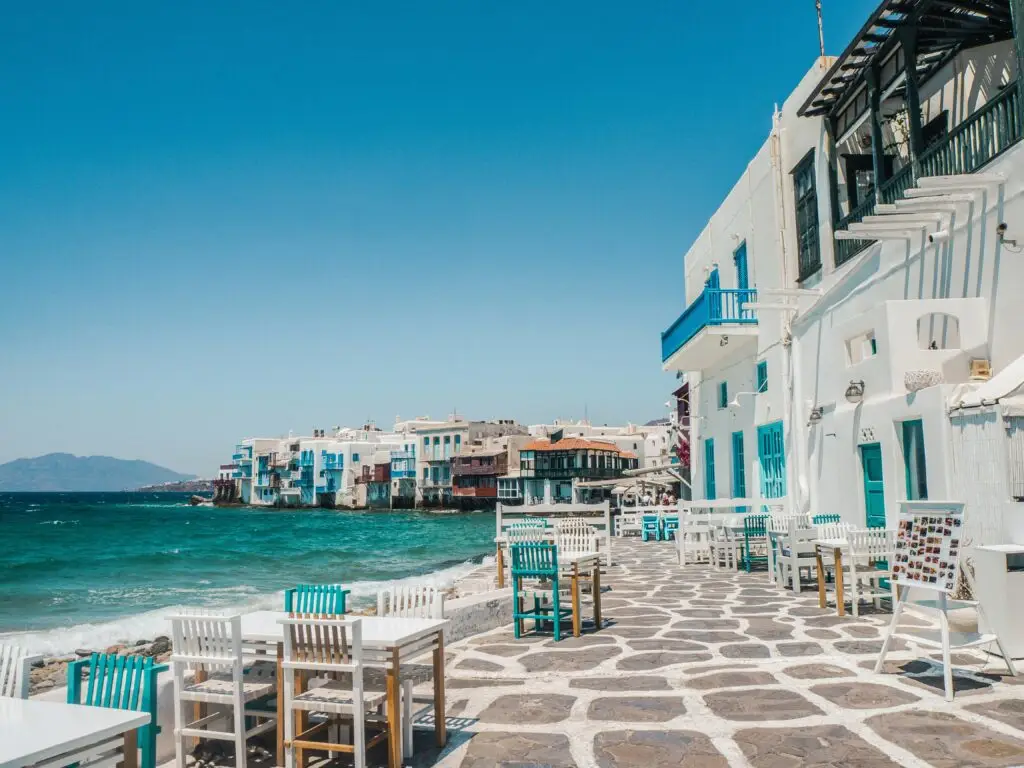
Little Venice in Mykonos — the kind of island weekend that becomes a regular part of life when you teach English in Greece.
The English Teaching Job Market in Greece
Greece’s English teaching market is built primarily on frontistiria — private language schools that have been the backbone of English education in Greece for decades. Because the public school system has historically underdelivered in English instruction, Greek families invest heavily in private English lessons for their children, creating consistent and reliable demand for qualified native English teachers.
Athens is the primary market with the highest concentration of frontistiria and corporate English opportunities. It is also the most expensive city in Greece, though still affordable by Western European standards.
Thessaloniki is Greece’s second city with a strong university population and an active language school market. More relaxed than Athens and often preferred by teachers who want a less overwhelming introduction to living in Greece.
Island postings exist but are limited and usually seasonal. Teachers who land island placements typically supplement with private tutoring to make the finances work, and the lifestyle more than compensates for the lower income.
The difference between international schools and language schools before you apply.
What Qualifications Do You Need to Teach English in Greece?
For frontistiria positions in Greece, you need a TEFL or CELTA certification of at least 120 hours and a bachelor’s degree. The degree requirement is closely tied to the Greek work permit process — without it, securing legal work authorization is significantly harder.
A teaching license is not required for language school positions, but it is a genuine advantage for corporate English training and any international school opportunities in Athens.
An honest review of Bridge TEFL, one of the most recognized online TEFL certification programs.
Greek frontistiria hire primarily for the September through June academic year. Applications are strongest in spring and summer for autumn placements — though some schools hire year-round to fill gaps.
The Frontistiria Schedule — What Your Week Actually Looks Like
Frontistiria run afternoon, evening, and weekend schedules — because Greek children attend public school during the day and language school in the afternoons and evenings. This means your working week looks very different from a traditional school day.
Expect to work Tuesday through Saturday, with Sunday and Monday off. Your mornings are free. Your afternoons and evenings are teaching hours. This schedule takes adjustment for American teachers accustomed to early mornings and packed daytime hours — and then becomes one of the things you love most about the frontistiria life.
Free weekday mornings are one of the underrated perks of teaching English in Greece. Museums, markets, archaeological sites, and the beach are all yours before the tourist crowds arrive.
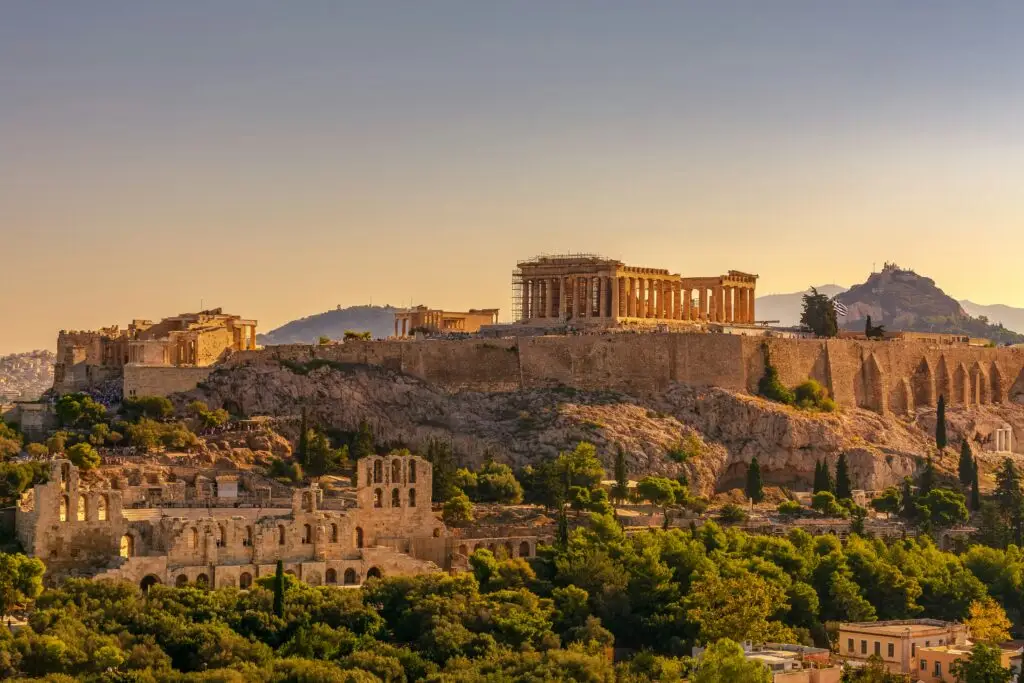
The Acropolis at golden hour — the view that greets you when you teach English in Athens, Greece.
Salary and Savings: What Can You Actually Earn in Greece?
Teaching English in Greece pays 900 to 1,500 dollars per month — modest by European standards, but paired with one of the continent’s most affordable costs of living.
| Position | Monthly Earnings (USD) |
|---|---|
| Frontistiria teacher (Athens) | $1,000 – $1,500 |
| Frontistiria teacher (Thessaloniki) | $900 – $1,300 |
| Corporate English trainer | $1,500 – $2,500 |
| Private tutoring (supplement) | $20 – $40/hour |
Monthly living costs in Greece:
| Expense | Athens (USD) | Thessaloniki (USD) |
|---|---|---|
| Rent (shared flat) | $400 – $650 | $300 – $500 |
| Groceries | $150 – $250 | $130 – $200 |
| Transport pass | ~$30 | ~$25 |
| Dining out and socializing | $100 – $200 | $80 – $160 |
| Total estimate | $800 – $1,100 | $600 – $900 |
Bottom line: Savings are limited for frontistiria teachers — Greece is not the place to go if building savings is your primary goal. But teachers who live like locals, eating souvlaki from street vendors at 2 euros and shopping at the laiki (open-air market), consistently find that their salary goes further than expected.
The Visa Process for US Teachers in Greece
US citizens need a work permit sponsored by their Greek employer to teach legally in Greece. EU freedom of movement does not apply to US passport holders, so securing work authorization before you arrive is essential.
Greece’s bureaucracy is legendary — slow, occasionally inexplicable, and requiring patience and persistence. Your school typically handles the work permit paperwork on your behalf, but the process takes time.
Before you leave the US, prepare apostilled documents — an apostille is an internationally recognized authentication stamp — including your university degree and a background check. These are required for the Greek work permit process and must be prepared in advance.
On arrival, you will need to register with local authorities and obtain an AFM (Arithmos Forologikou Mitroou — Greek tax identification number) for banking and contracts.
Protecting your US teaching position before you commit to anything abroad
What Is Daily Life Like Teaching English in Greece?
Daily life in Greece is unlike living almost anywhere else in Europe — slower, warmer, more spontaneous, and more beautiful than most teachers expect before they arrive.
Greece operates on its own time. Shops close in the afternoon for a long break and reopen in the evening. Dinner starts at 9 pm. Social life happens late and runs later. For American teachers accustomed to early mornings and packed schedules, this adjustment takes a few weeks — and then becomes one of the things you love most about being there.
Greeks are extraordinarily warm and hospitable toward foreigners. Being invited to a Greek family home for a meal is one of the great experiences of living in the country — the table will be covered in food, the wine will flow, and you will be treated like family within minutes of arriving.
The heat is real. Athens in July and August regularly hits 38 to 40 degrees Celsius (100 to 104 degrees Fahrenheit). The good news: the school year runs September through June, meaning your hardest months coincide with your summer break.
The beauty is relentless. No amount of practical advice fully prepares you for how beautiful Greece actually is. The light in the late afternoon, the way the sea looks from a hillside above a whitewashed village, the ancient ruins that appear without warning in the middle of a modern city — living in Greece means being confronted with beauty on a daily basis.
The Islands — One of the Greatest Perks of Teaching in Greece
Living on the Greek mainland means the islands are always within reach — and weekend island trips are one of the defining pleasures of teaching English in Greece.
Ferries from Piraeus — Athens’ main port — connect to the Cyclades, the Dodecanese, and the Ionian Islands. A weekend on Santorini, Mykonos, Naxos, or the lesser-known gems like Milos or Folegandros is affordable, accessible, and genuinely unlike anywhere else in Europe.
For longer trips, Italy, Albania, and Croatia are all accessible by ferry or budget flight from Greece. -ferries.gr lists all major Greek ferry routes and schedules for planning island trips.
What to pack for a year teaching English in Greece
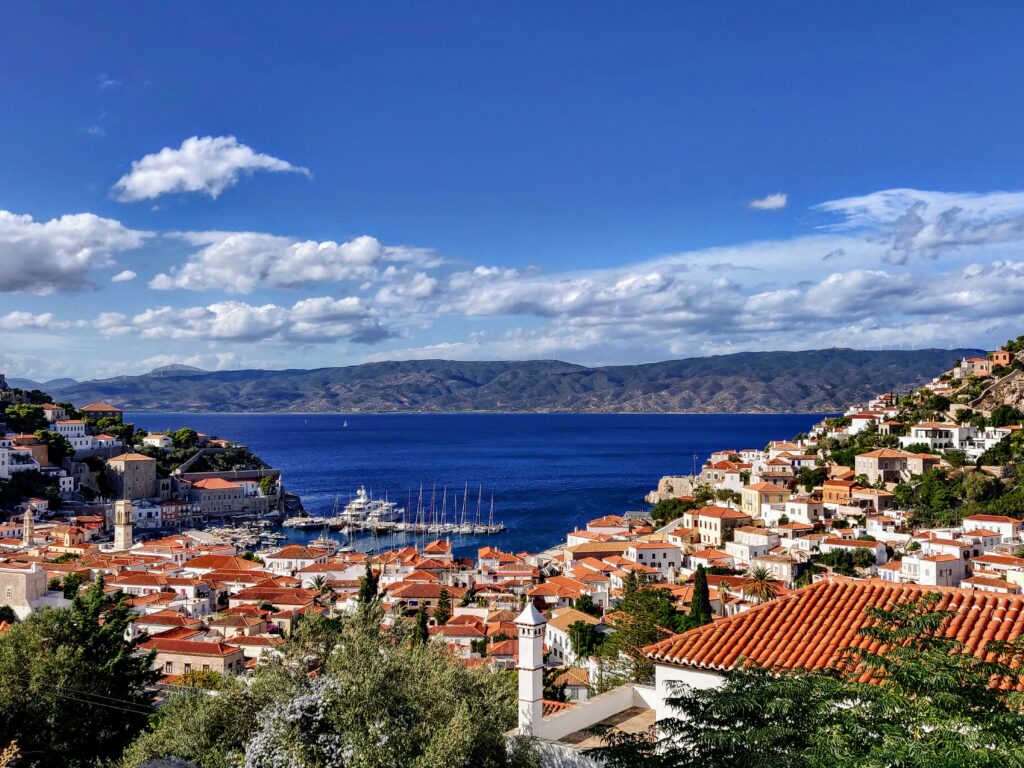
Hydra island — just 90 minutes by ferry from Athens and one of dozens of Greek islands within easy reach when you teach English in Greece.
Food in Greece: One of the Great Perks of Living Abroad
Greek cuisine is simple, fresh, and extraordinary — and eating well on a teacher’s salary in Greece is genuinely easy.
A souvlaki from a street vendor costs 2 to 3 euros. A full meal at a neighborhood taverna costs 10 to 15 euros, including wine. Buying fresh produce at a laiki and cooking at home costs very little. [EXTERNAL LINK: https://www.visitgreece.gr/gastronomy/ — according to the Greek National Tourism Organization, Greek cuisine is built on olive oil, seasonal vegetables, fresh seafood, and centuries of culinary tradition]
Essential dishes to know:
- Souvlaki — grilled meat on a skewer or in pita with tzatziki, tomato, and onion. 2 euros from a street vendor.
- Spanakopita — spinach and feta in flaky phyllo pastry. Available everywhere.
- Horiatiki (Greek salad) — tomato, cucumber, olives, red onion, and feta. Simple and perfect.
- Moussaka — eggplant, minced meat, and béchamel baked until golden. Deeply satisfying.
- Fresh seafood — grilled octopus, sea bass, and sardines at waterside tavernas.
- Loukoumades — Greek honey doughnuts drizzled with honey and cinnamon.
Coffee culture in Greece is equally distinctive. Freddo espresso and freddo cappuccino — espresso blended with ice — are the summer staples. Greek coffee (ellinikos kafes) is thick, strong, and served with grounds at the bottom. Never stir it. Never rush it.
The Honest Challenges of Teaching in Greece
Greece is extraordinary — but teachers should go in with clear eyes about three real challenges.
Savings are very limited. The frontistiria salary is modest, and the temptation to spend on island trips, food, and nightlife is real. If building savings is your primary goal, South Korea, Japan, or the UAE are stronger markets.
The bureaucracy is legendary. Work permit processing, tax registration, and residency paperwork all move at their own pace. Teachers who embrace this with humor rather than frustration consistently have the best experiences.
The heat in summer is intense. Athens in July and August is genuinely brutal. Fortunately, the school year ends in June, giving you the hottest months free for island escapes.
FAQs: Teaching English in Greece
Q: Do I need a TEFL certificate to teach English in Greece?
A: Yes — for frontistiria positions in Greece, a TEFL or CELTA certification of at least 120 hours is standard. A bachelor’s degree is also typically required for legal work authorization. Bridge TEFL offers an accredited online program you can complete before leaving the US.
Q: How much do English teachers earn in Greece?
A: Frontistiria teachers earn approximately $900–$1,500 per month, depending on city and experience. Monthly living costs run $800–$1,100 in Athens and $600–$900 in Thessaloniki, meaning savings are modest but the lifestyle is extraordinary.
Q: Can US citizens teach English in Greece legally?
A: Yes — but US citizens need an employer-sponsored work permit. EU freedom of movement does not apply. Your school typically handles the paperwork, but bring apostilled copies of your degree and background check before you leave the US.
Q: What is a frontistirio and how does it affect my schedule?
A: A frontistirio (plural: frontistiria) is a private language school — the primary employer of English teachers in Greece. They run afternoon, evening, and weekend schedules, meaning you typically work Tuesday through Saturday with weekday mornings free.
Q: Is Greece a good place to teach English for lifestyle reasons?
A: Absolutely. Greece consistently ranks among the top European teaching destinations for quality of life — warm weather, extraordinary food, island weekends, and a culture of genuine hospitality. Teachers who choose experience over salary consistently describe it as one of the best years of their lives.
Is Greece Right for You?
Greece is not the right choice if saving money is your primary goal. The frontistiria salary is modest, and the lifestyle is genuinely tempting to spend on.
But for cultural experience, natural beauty, food, and the sheer quality of daily life, Greece ranks among Europe’s best teaching destinations — and teachers who choose it consistently say the same thing: they underestimated how much they would love it.
If Greece sounds like your place, start here.