Can you teach English in Prague as an American teacher? Yes, and I did it. I took my TEFL course in Prague one summer, then taught at a language school from September until the following July.
I was a few years into my U.S. teaching career when I made the move. This guide covers what I wish I’d known first. That includes jobs, real pay, visas, costs, and daily life.
Only have a summer break? My guide to teaching English in Prague this summer covers camps and short-term jobs. This post is about the full school year.
Key Takeaways
- You can teach English in Prague as an American, and most teachers work at private language schools.
- Many schools want a 120-hour TEFL or CELTA certificate.
- Teachers earn about 23,000–34,000 CZK a month, which covers living costs but leaves little for savings.
- Weekend trips to Vienna, Berlin, Dresden, and Český Krumlov are easy by train.
- Expect challenges like the Czech language, dark winters, and building a new community.
- I taught at a Prague language school from September to July, with classes as small as two students.
In This Guide
- Teaching English in Prague: Quick Facts
- The English Teaching Job Market in Prague
- What Qualifications Do You Need to Teach English in Prague?
- How Much Can You Earn Teaching English in Prague?
- What It Costs to Live in Prague
- Visa Options for Americans in Prague
- My Year Teaching English in Prague
- Daily Life in Prague
- Czech Holidays and Festivals
- Weekend Travel From Prague
- The Real Challenges of Teaching in Prague
- Full Year or Just a Summer?
- FAQs: Teaching English in Prague
- Is Prague Right for You?
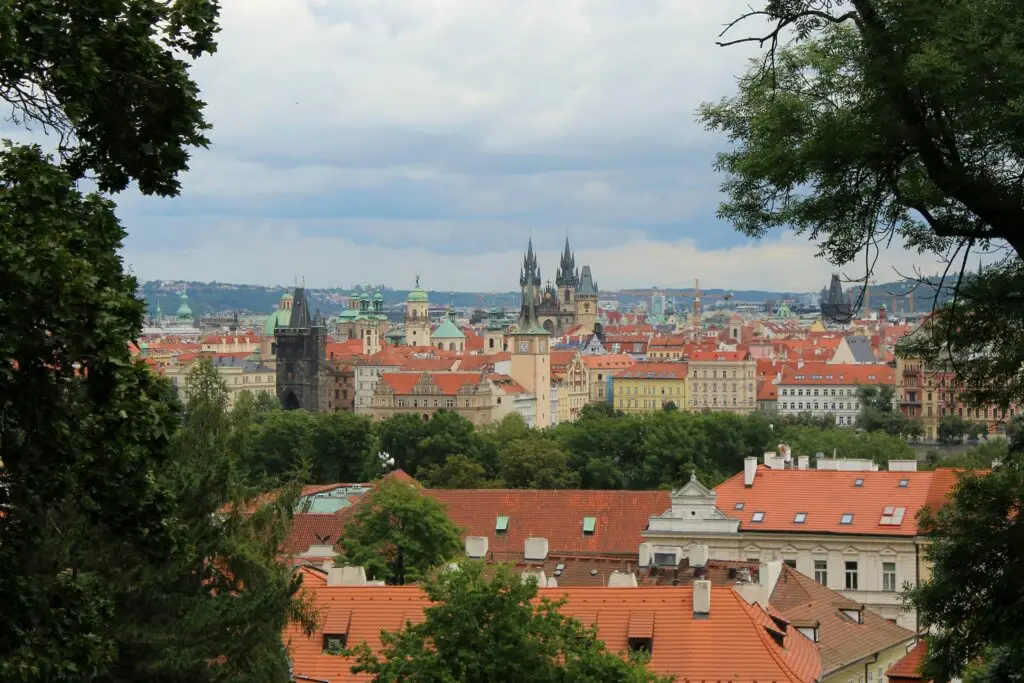
The Prague skyline from above. For a year, this was my city.
Teaching English in Prague: Quick Facts
| Topic | What to Expect |
|---|---|
| Main employers | Private language schools (jazykové školy) |
| Typical pay | About 23,000–34,000 CZK a month (roughly $1,000–$1,500) |
| Certificate | 120-hour TEFL or CELTA |
| Visa for Americans | Trade license (Živno) or employer-sponsored Employee Card |
| Hiring season | Late summer for September starts, plus January |
| Best for | Teachers who want a year abroad, travel, and small classes |
The English Teaching Job Market in Prague
Most English teachers in Prague work for private language schools. These schools teach kids after school and adults before and after work. In addition, some send teachers into local companies.
Prague’s job market has four main parts:
- Language schools: the easiest way in for new teachers
- Company classes: lessons for professionals at their offices, often through a language school
- Bilingual and international schools: competitive jobs that usually require a teaching license
- Private lessons: a common way to add income on the side
Czech students are also motivated. After all, English helps with careers in the EU and international business, so many adults sign up on their own. As a result, the classroom feels very different from a required class.
If you’re a licensed teacher, compare both paths in my guide to international schools vs. language schools.
What Qualifications Do You Need to Teach English in Prague?
Most language schools in Prague want a 120-hour TEFL or CELTA certificate. Many also prefer a bachelor’s degree. Plus, an employer-sponsored work visa may require a certified, translated diploma.
First, decide where to earn your TEFL: in person in Prague, like I did, or online before you leave. New to the term? Start with my guide to what TEFL stands for. If you’d rather study from home, my Bridge TEFL review covers one accredited online option.
For licensed U.S. teachers: your classroom experience is a real advantage. Language schools notice it right away. Meanwhile, bilingual schools often require it.
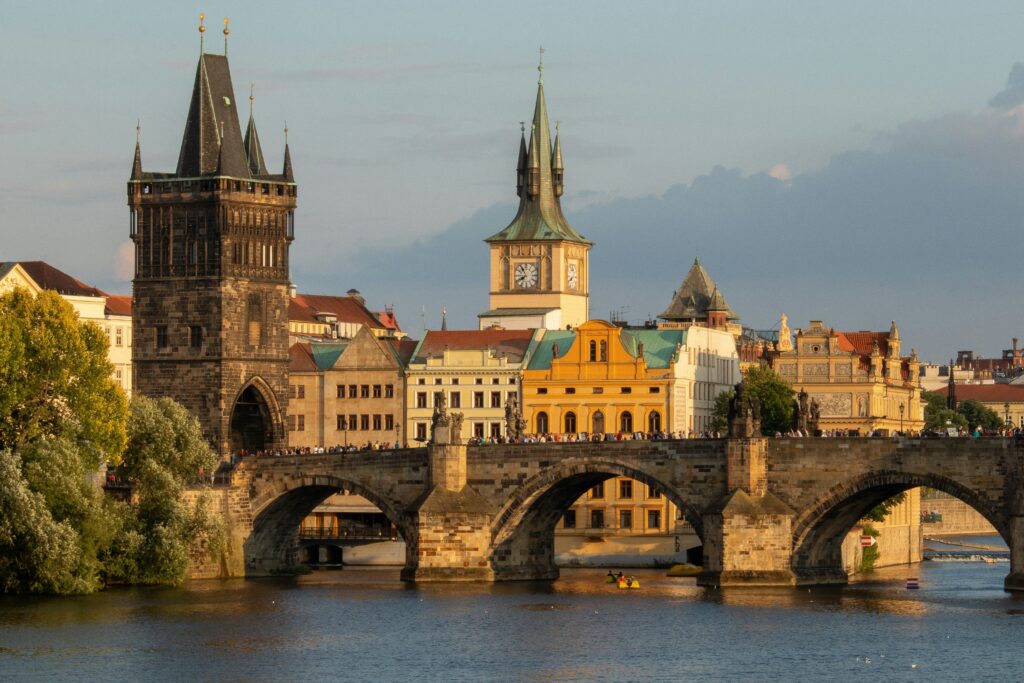
Charles Bridge at golden hour, part of the everyday backdrop when you teach English in Prague.
How Much Can You Earn Teaching English in Prague?
Czech language school teachers typically earn about 23,000–34,000 CZK a month (roughly $1,000–$1,500). That range comes from International TEFL Academy’s Czech salary guide, updated in October 2026. However, Prague usually pays toward the higher end.
| Type of Work | Typical Pay |
|---|---|
| Language school (full time) | 23,000–34,000 CZK a month (about $1,000–$1,500) |
| Private 1:1 lessons | 250–350 CZK an hour (about $11–$15) |
| Small private groups | Up to about 400 CZK an hour (about $18) |
Be realistic about savings. That same guide puts living costs at about $800–$1,600 a month. So most teachers cover their costs and travel, but they don’t save much.
For U.S. teachers on a leave of absence, this matters even more. You may still have bills at home, so plan for them before you go. My leave of absence guide walks through how to plan for the year.
What It Costs to Live in Prague
A sample monthly budget for one teacher in a shared flat:
| Expense | Monthly Cost (USD) |
|---|---|
| Room in a shared flat | $400–$600 |
| Groceries | $180–$250 |
| Public transport pass | About $25 |
| Eating out and socializing | $100–$180 |
| Weekend travel | $80–$150 |
| Total | About $785–$1,205 |
Rent is the biggest variable, because Prague rents have climbed in recent years. As a result, a room near the center costs more. On the other hand, public transport is cheap and covers trams, metro, and buses across the city. You can check current pass prices on the Prague Integrated Transport website.
Visa Options for Americans in Prague
U.S. citizens need a long-term visa or residence permit to work legally in the Czech Republic. EU freedom of movement doesn’t apply to Americans, so plan this part first.
Most American teachers then choose one of two routes:
- The trade license, or Živno visa: You register as a self-employed teacher and work with one or more schools as a contractor. According to International TEFL Academy, this is the route most Americans use. It usually takes 2–3 months, and many teachers hire a visa help service.
- The Employee Card: A Czech employer hires you directly, and you apply through the Czech embassy or consulate. However, fewer language schools sponsor this, so it’s harder to find.
After you arrive, you’ll also need to register with the Foreign Police. Requirements and timelines change, so always check the Czech consulate’s official visa pages before you apply.
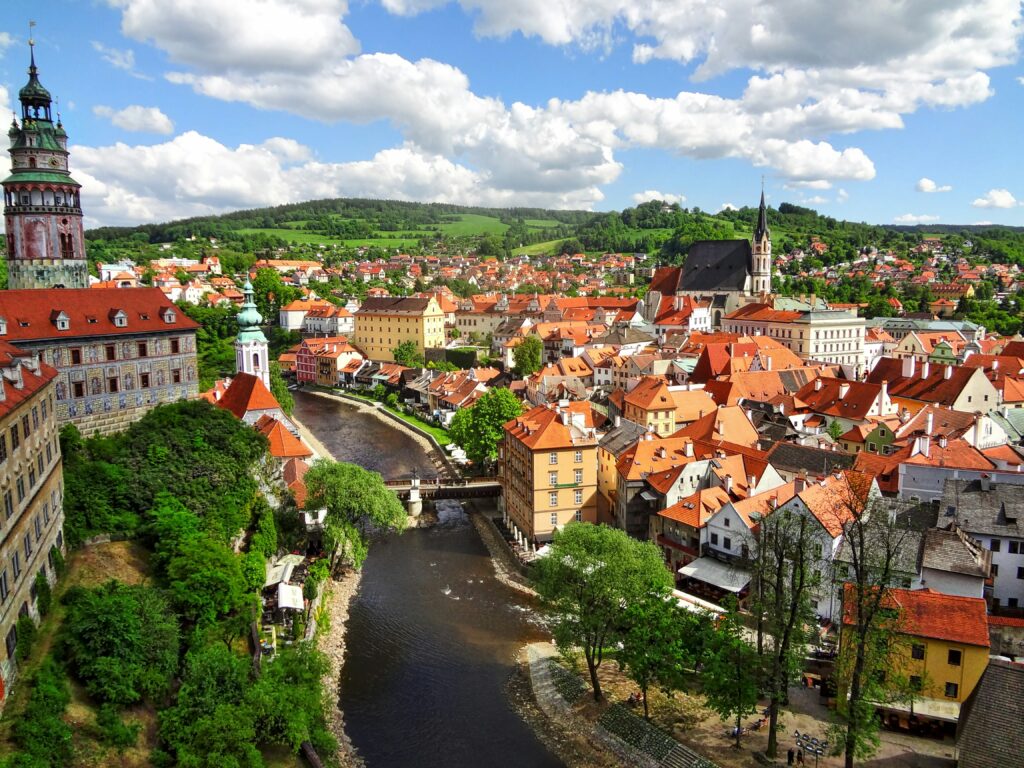
Český Krumlov, my favorite trip from Prague, about three hours south by train or bus.
My Year Teaching English in Prague
My year started with a TEFL course in Prague, run by the Czech government at the time. That program no longer exists in its original form. Still, it gave me my first friends in the city, since I lived with classmates from the course.
About two weeks after I arrived, a group of us took the train to Karlštejn Castle. Meanwhile, our instructor taught us Czech phrases, and I said “goodbye,” na shledanou, wrong over and over. You can read more about the course in my guide to TEFL courses.
That September, I started at a language school, and I stayed until the following July. In the mornings, I taught children ages two and a half to five, with about five students in the class. Then in the afternoons, I came back to teach two 9- and 10-year-olds.
Altogether, I worked about 29 hours a week. I also met with a Czech man once a week for private conversation lessons. Those 1:1 meetups quickly became one of my favorite parts of the job.
The class sizes alone made the move worth it. After years of crowded U.S. classrooms, teaching five students at a time reminded me why I became a teacher.
Outside of school, I also spent hours in Letná Park, cheered for Slavia Praha, and fell in love with Czech food. I also traveled all over the Czech Republic and Central Europe.
Daily Life in Prague
Prague is walkable, beautiful, and easy to get around. Like me, most teachers live in a shared flat and ride the tram or metro to their classes.
The food is hearty Central European comfort food. For example, try svíčková (beef in cream sauce), guláš, and smažený sýr (fried cheese). Czech beer is famous, too. So “Jedno pivo, prosím” (one beer, please) is a phrase you’ll use often.
The hospoda, or neighborhood pub, is the center of social life. In fact, it’s where many friendships start, for locals and teachers alike.
Czech Holidays and Festivals
Living in Prague means you celebrate holidays alongside locals, not as a tourist. These were some of my favorite parts of the year.
- Christmas markets (Vánoční trhy): From late November, Old Town Square fills with stalls selling svařák (mulled wine) and trdelník (chimney cake).
- Easter Monday (Velikonoce): Boys playfully tap girls with decorated willow branches called a pomlázka. It sounds strange at first, but it’s a cheerful folk tradition.
- Burning of the Witches (Pálení čarodějnic): On April 30, bonfires across the country mark the end of winter.
- Prague Spring Music Festival: Every May and June, this classical music festival opens with Smetana’s Má vlast.
Weekend Travel From Prague
Prague is an easy base for weekend trips across Central Europe. In fact, several major cities are only a few hours away by train.
| Destination | Approximate Train Time |
|---|---|
| Dresden | 2 hours |
| Vienna | 4 hours |
| Berlin | 4.5 hours |
| Kraków | 7–8 hours (or an overnight train) |
| Budapest | 6–7 hours |
My favorite trip was Český Krumlov, a fairytale UNESCO town about three hours south. In winter, with snow on the castle, it’s magical. For closer ideas, see my guide to day trips from Prague.
Comparing cities? Here’s my guide to teaching English in Vienna.
The Real Challenges of Teaching in Prague
Prague was one of the best years of my life, but it wasn’t always easy. Go in knowing these three challenges.
- The language: Czech is hard. So outside tourist areas, you’ll want basic greetings, numbers, and grocery words. Even a few phrases change how locals treat you.
- The winter: From November through February, days are short, dark, and cold. Honestly, I can personally say it’s real. If dark days affect you, plan trips south during the worst months.
- Building a community: It took me time to find my people. It also took time to feel comfortable with public transport and my limited Czech. So give yourself a few months before you judge the city.
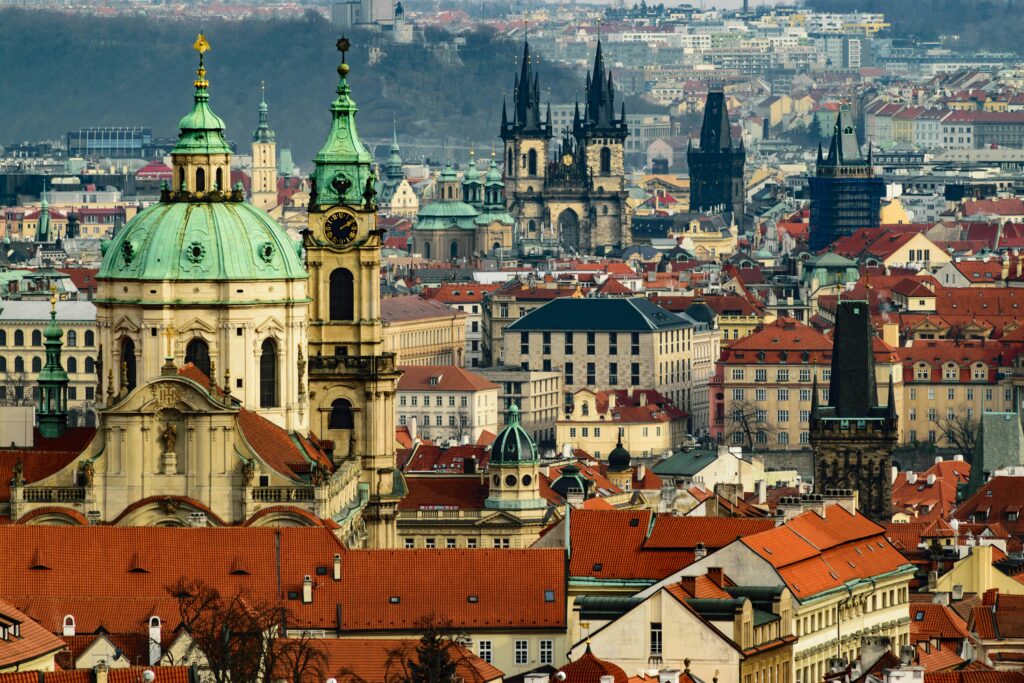
Malá Strana’s rooftops, one of my favorite views in the city.
Full Year or Just a Summer?
If you’re not sure about a full year, a Prague summer is a smart test run. That’s exactly how I started. My TEFL course one summer is what convinced me to go back for a full school year.
- Just the summer: Teach camp without a leave of absence. See my guide to teaching English in Prague this summer.
- A full school year: Request a leave of absence, then plan your visa and job. This guide is your starting point.
FAQs: Teaching English in Prague
Q: Do I need a TEFL certificate to teach English in Prague?
A: For most language school jobs, yes. Schools usually want a 120-hour TEFL or CELTA certificate. Many also prefer a bachelor’s degree.
Q: How much do English teachers earn in Prague?
A: Language school teachers typically earn about 23,000–34,000 CZK a month, or roughly $1,000–$1,500. Private lessons usually pay about 250–350 CZK an hour.
Q: Can Americans teach English in Prague legally?
A: Yes, but you need a long-term visa or residence permit. Most Americans use the Živno trade license. Some get an Employee Card through a school that hires them directly.
Q: Can you save money teaching English in Prague?
A: Usually not much. Most teachers cover rent, food, and travel. However, private lessons on the side can help.
Q: When do Prague language schools hire?
A: Most hiring happens in late summer for September starts. There’s often a second hiring round in January.
Q: Can I teach in Prague for just the summer?
A: Yes. Summer camps hire for a few weeks at a time, so you don’t need a leave of absence.
Is Prague Right for You?
Prague is a great fit if you want small classes, a beautiful city, and easy travel across Central Europe. It suits teachers who want the European experience and can live on a modest salary for a year.
However, you’ll need to embrace a hard language and a real winter. In exchange, you get a city that will always have a piece of my heart.
The guide covers Prague and the Czech Republic in full, along with six other European teaching destinations.
Last updated: November 2026