
Thinking about teaching English in Croatia? Here’s what you’ll earn, where the jobs are, the visa process, and daily life in Zagreb and beyond.
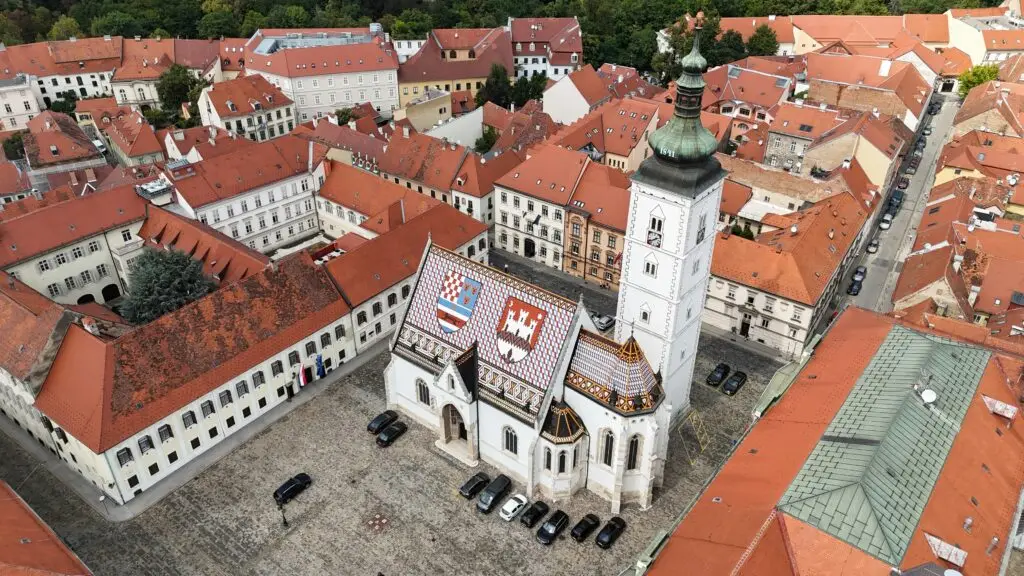
This is where the year-round jobs actually are — not the coast, but this compact, café-filled capital.
Why Teach English Abroad in Croatia?
Croatia joined the EU in 2013 and adopted the euro in 2023. Its growing economy and Adriatic coastline make it one of Europe’s most appealing — and still affordable — places to teach abroad. Picture it as a summer tourist spot, and you’ll be surprised: living there as a teacher is a richer, different experience.
This guide covers where the jobs are, what you’ll earn against real living costs, the visa process, and daily life depending on where you land.
Where to Teach English in Croatia
Croatia’s English-teaching market centers on Zagreb, the capital, where private language schools, corporate English training, and a growing international school sector provide the most consistent year-round opportunities.
Coastal cities, including Split and Dubrovnik, have seasonal demand for language schools, but the market contracts significantly outside of summer. Split has a more established year-round economy than Dubrovnik, worth considering if you want coastal life with steadier work.
The biggest mistake teachers make is assuming coastal Croatia has the same year-round job market as Zagreb — it doesn’t, and planning around that difference upfront saves a lot of frustration later.
Croatia Teacher Salary and Cost of Living
Expect to earn $900-$1,400 per month teaching English in Croatia. Monthly living costs in Zagreb run $700 to $950, which makes modest savings possible — unusual among European teaching destinations, where salaries in places like Spain often barely cover expenses.
Comparison: Croatia at a Glance
| Category | Detail |
|---|---|
| Typical monthly salary | $900–$1,400 |
| Zagreb living costs | $700–$950/month |
| Main job market | Zagreb (year-round) |
| Secondary market | Split, Dubrovnik (seasonal) |
| Visa type | Work permit, employer-sponsored |
| EU status | Member since 2013; euro since 2023 |
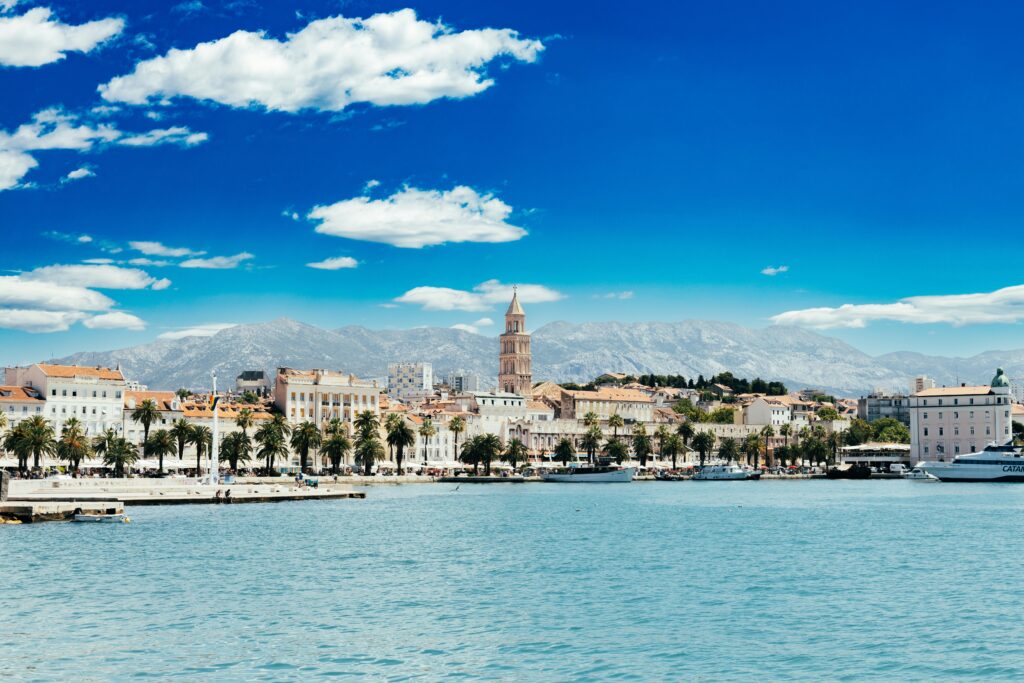
This is the view waiting for you on the coast — even if Zagreb’s where the year-round jobs are.
Croatia Work Visa for Teachers
Croatia is an EU member state, but US citizens still need a work permit to teach legally — your employer typically sponsors the process. This puts Croatia in a similar visa category to teaching in Vienna, another EU country where the paperwork is handled by your employer rather than a government program. Bring apostilled credentials from home, since Croatian authorities require them for the application.
Processing takes two to three months, so start gathering documents as early as possible once you have a job offer in hand.
Daily Life: Zagreb vs. the Coast
Daily life in Croatia depends on where you’re based. Zagreb, home to most year-round teaching positions, is a compact Central European capital with a thriving café culture and a relaxed pace — university city energy meets Mediterranean food, at prices that make both affordable.
Coastal Croatia, particularly Split, offers a different rhythm. The Adriatic sits at your doorstep, and the old town — built inside the walls of Diocletian’s Palace — puts your daily commute through a Roman emperor’s living quarters. The trade-off: a smaller, more seasonal job market.
Croatian is a South Slavic language, genuinely challenging for English speakers. Most younger Croatians in cities speak excellent English, thanks to tourism. Learning a few phrases is received warmly and opens doors English alone doesn’t.
A Note on Timing for Teaching Abroad in Croatia
Croatia’s seasons shape daily life more than most destinations. Autumn is arguably the best window. It is warm enough for the coast, quiet enough to feel like a local, with September and October light on the Adriatic that’s hard to overstate. Winters in Zagreb run cold and grey, but the Christmas markets bring their own charm. While summers on the coast are extraordinary but crowded and expensive.
Food and Daily Pleasures
Croatian food doesn’t get the recognition it deserves. It sits at the crossroads of Mediterranean and Central European traditions. On the coast, expect grilled fish with olive oil and lemon, plus crni rižoto — black risotto made with cuttlefish ink, rich and savory. Inland and in Zagreb, the cuisine shifts to roast lamb, bean stews, and cured meats, echoing Croatia’s Austro-Hungarian heritage.
Istria, the northwestern peninsula, deserves a special mention for its white truffles — some of the finest in Europe, and cheaper than Italy’s. A full meal at a local konoba costs €10–15, including wine. A burek pastry costs under €2, a satisfying breakfast on any teacher’s budget.
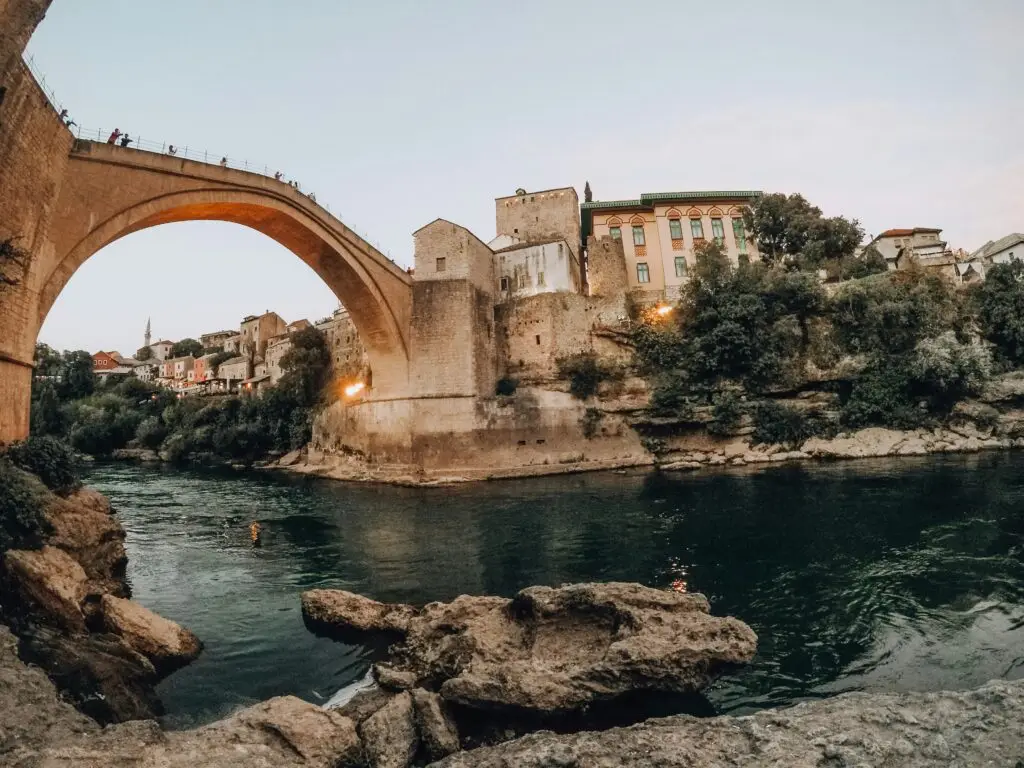
Mostar’s Old Bridge, about two hours from Zagreb — one of the easiest weekend trips on this list.
Weekend Travel From Croatia
Croatia’s position on the Adriatic makes it one of Europe’s best-located teaching bases. Bosnia and Herzegovina and Slovenia are both about two hours from Zagreb. While Vienna and Budapest run three to four hours. In summer, the islands of Hvar, Brač, and Korčula are accessible by ferry for weekend trips and rank among Europe’s most beautiful destinations.
A Note from Me
Every country I research for this site gets evaluated the same way I evaluated Prague when I did my own TEFL course there: not “Is this a nice place to visit,” but “Could I actually build a year of my life here?” Croatia keeps surprising people who arrive expecting a postcard and find, instead, a place that’s genuinely livable on a teacher’s income.
For Teachers on a Leave of Absence
Planning a leave of absence? Croatia’s employer-sponsored visa takes 2–3 months to process, so timing matters more than usual — sync your application with your district’s approval timeline. Confirm your leave dates before committing to a contract start date, since work permits are tied to a specific employer and position.
FAQs: Teaching English in Croatia
Q: How much can I expect to earn teaching English in Croatia?
A: Typical salaries run $900 to $1,400 per month, with Zagreb living costs around $700 to $950 per month — leaving modest room for savings, which is uncommon among European teaching destinations.
Q: Do I need a visa to teach abroad in Croatia?
A: Yes. Croatia is an EU member state, but US citizens still need a work permit, typically sponsored by the hiring school. Processing takes two to three months.
Q: Is it better to teach in Zagreb or on the coast?
A: Zagreb has the only genuinely year-round job market. Coastal cities like Split have seasonal language school work that contracts significantly outside of summer, so Zagreb is the safer choice for a full-year contract.
Q: Do I need to speak Croatian to teach there?
A: No. Most younger Croatians in cities speak excellent English. Learning basic Croatian phrases is appreciated and helps build friendships, but it’s not required for teaching or daily life.
Is Croatia Right for Your Teaching Year Abroad?
Croatia offers something rare in European teaching destinations: a salary that can actually keep pace with the cost of living, paired with a location that puts half of Central Europe within a weekend’s reach. If Zagreb’s café culture and the Adriatic coast are calling, the visa timeline is the one thing to start planning around first.
For a full breakdown of how Croatia compares to other European teaching destinations, the Teach in Europe Guide walks through visas, salaries, and job-hunting country by country, and the free Decision Guide can help you figure out if this year is the right one to go.