
Want to teach English in Italy? Here’s what the job market, salary, visa process, and daily life actually look like — from someone who’s done it.
Italy has a way of making people do things they never planned to do.
You visit for two weeks, eat your weight in pasta, stand in front of something ancient and beautiful, and suddenly the idea of going back to your regular life feels genuinely difficult. You start Googling because you want to stay.
Here’s the answer: yes, you can teach English in Italy. The demand for native English speakers is real and consistent — especially in Business English, particularly in cities like Milan, Rome, and Bologna. But Italy is also one of the more competitive and bureaucratically complex markets in Europe for foreign teachers. Salaries run modestly, the visa process takes 3–4 months, and the cost of living in major cities is higher than in most of Central and Eastern Europe.
This guide gives you the honest picture — jobs, salary, visa, daily life, and what Italy is actually like to live in. Not the Instagram version.
If you’re comparing destinations, start with how Italy stacks up against the best countries to teach abroad

Rome, where your Tuesday commute looks like this when you are teaching abroad in Italy.
Where Are the English Teaching Jobs in Italy?
Italy’s strongest demand for English teachers is in Business English — not general ESL. Corporations, law firms, financial institutions, and global companies headquartered in Milan, Rome, and Bologna consistently hire native English speakers to train professional staff.
This matters because Business English work pays better, offers more reliable contracts, and attracts motivated, self-directed students. If you have any professional background outside teaching — finance, law, tech, marketing — lead with it in your applications.
Language schools — called scuole di lingue — are the most common employers of English teachers from abroad across Italy. Quality varies significantly between schools. Some run tight operations with reliable pay and structured support. Others are chronically disorganized and slow with paychecks. Research every school thoroughly before signing anything — ask for references from current teachers and read reviews on Dave’s ESL Cafe and country-specific Facebook groups before accepting any offer.
Private tutoring significantly supplements many teachers’ incomes, particularly in larger cities where demand for conversational English practice is high.
City-by-City Breakdown: Where to Teach English in Italy
Milan is the Business English capital of Italy. As Italy’s financial and commercial hub, Milan has the highest concentration of corporate English training, and its salaries reflect it. Cost of living is also the highest of any Italian city, but the earning potential makes it worth it for teachers targeting the corporate market.
Rome offers a more mixed market — language schools, private tutoring, university-adjacent opportunities, and some corporate work. It’s slower to break into than Milan, but more competitive, and the experience of living in Rome is extraordinary. A dedicated Rome guide is coming soon.
Florence, Bologna, and Padova are the university cities worth considering. Smaller markets, but lower cost of living, and a genuinely strong appetite for English learning. Bologna in particular has a surprisingly active language school scene for its size.
| City | Job Market | Avg. Monthly Salary | Cost of Living |
|---|---|---|---|
| Milan | Strong — Business English | €1,400–€1,800 | High |
| Rome | Moderate — mixed | €1,000–€1,400 | Moderate–High |
| Florence | Moderate — schools + tutoring | €1,000–€1,300 | Moderate |
| Bologna | Moderate — university city | €1,000–€1,300 | Moderate |
What Qualifications Do You Need to Teach English in Italy?
Most Italian language schools require a TEFL or CELTA certificate plus a bachelor’s degree. The CELTA — Certificate in English Language Teaching to Adults, issued by Cambridge Assessment English, carries the most weight with higher-paying employers and international schools. A TEFL certificate from a recognized provider, such as TEFL Worldwide Prague or International TEFL Academy, opens doors at most language schools.
International schools in Italy — institutions teaching the IB (International Baccalaureate) or Cambridge curriculum to expatriate and local families — have a significantly higher bar. They hire credentialed teachers with subject-area licenses and classroom experience, and their salary and benefits packages reflect that. Schools like the International School of Milan and the Rome International School are the top employers in this category.
If you’re a licensed teacher weighing your options, our full comparison of international schools vs language schools breaks down what each path actually looks like day to day.
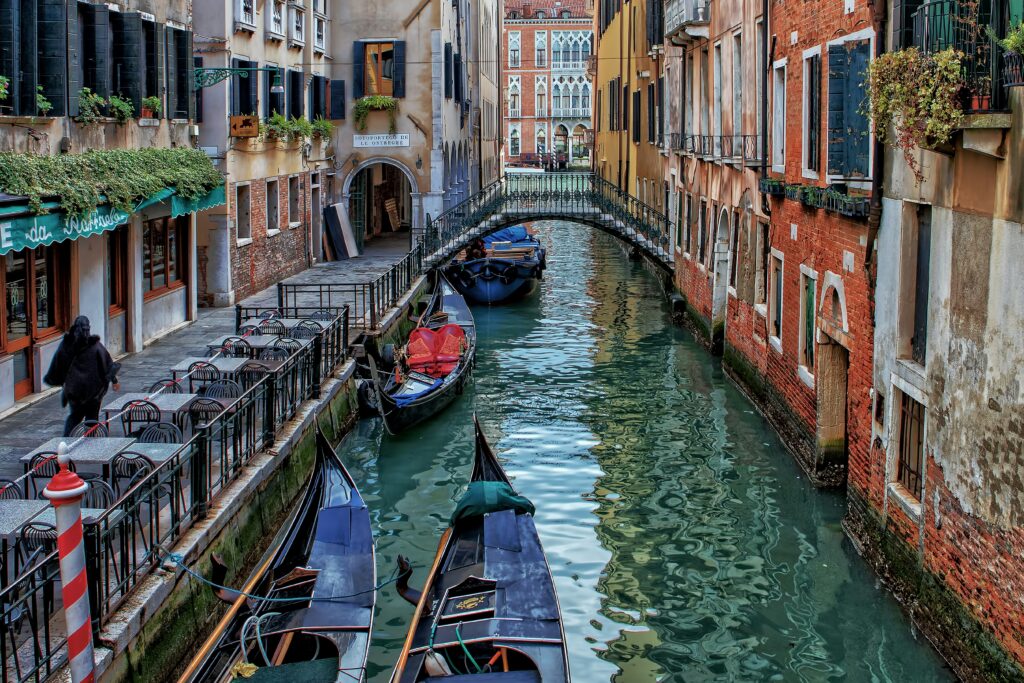
Venice — great scenery when teaching abroad in Italy.
Salary and Cost of Living: The Honest Numbers
English teachers in Italy typically earn between €1,000 and €1,800 per month, depending on city, employer type, and experience. Business English trainers working with corporate clients in Milan earn at the higher end. Entry-level language school positions in smaller cities sit closer to €1,000–€1,200.
Savings are limited — and that’s the honest truth. Italy is not a save-money destination. Rent in Milan or Rome for a private room runs €700–€1,200 per month in 2024, according to Expatistan’s cost of living index. Groceries, transport, and even the occasional meal out add up quickly in major Italian cities.
If building savings is your primary goal, teaching in Prague offers a dramatically better salary-to-cost ratio. Italy is better approached as a lifestyle experience that largely pays for itself — not a financial reset.
The Italian Work Visa: What You Need to Know
Getting a work visa for Italy as a non-EU citizen is genuinely complex — and the timeline is longer than most people expect. Italy requires a nulla osta — a work authorization document issued by the Italian Ministry of Labor — before you can apply for a work visa at your country’s Italian consulate. The full process typically takes 3–4 months.
The key steps for most applicants:
- Secure a job offer from an Italian employer before starting any paperwork
- Your employer files for the nulla osta in Italy
- Once approved, apply for a D-visa (long-stay visa) at your nearest Italian consulate
- On arrival, convert the D-visa into a permesso di soggiorno (residence permit)
Italy participates in the annual decreto flussi — a work permit quota system that opens periodically, adding another layer of timing complexity. The Italian Ministry of Foreign Affairs visa portal is the official source for current requirements.
EU citizens have a significant advantage — they don’t need work authorization and can be hired immediately. Some Italian employers actively prefer EU candidates for this reason. Factor this into your job search strategy and target schools with a track record of hiring non-EU teachers.
Start early. If you’re targeting a September school-year start, you need to be actively job-hunting by April or May at the latest.
What Does Daily Life Actually Look Like When You Teach English in Italy?
Teaching in Italy means living at a genuinely different pace — and for most teachers, that’s the whole point. Lunch breaks are real. The afternoon slowdown is real. Colleagues invite you to the bar for an espresso between lessons. Students want to talk about calcio (football) and local politics as much as they want to practice presentations.
Most teachers work a split schedule — morning lessons, a long midday break, then afternoon or evening corporate sessions. Contact hours typically run 20–25 hours per week, leaving significant chunks of the day and every weekend genuinely free. For anyone coming from an overscheduled professional life, this rhythm takes adjustment — and then becomes one of the things you love most.
Italy has more UNESCO World Heritage Sites than any other country in the world, according to UNESCO’s World Heritage List. Living there means that history isn’t a weekend trip — it’s the backdrop of your Tuesday commute.
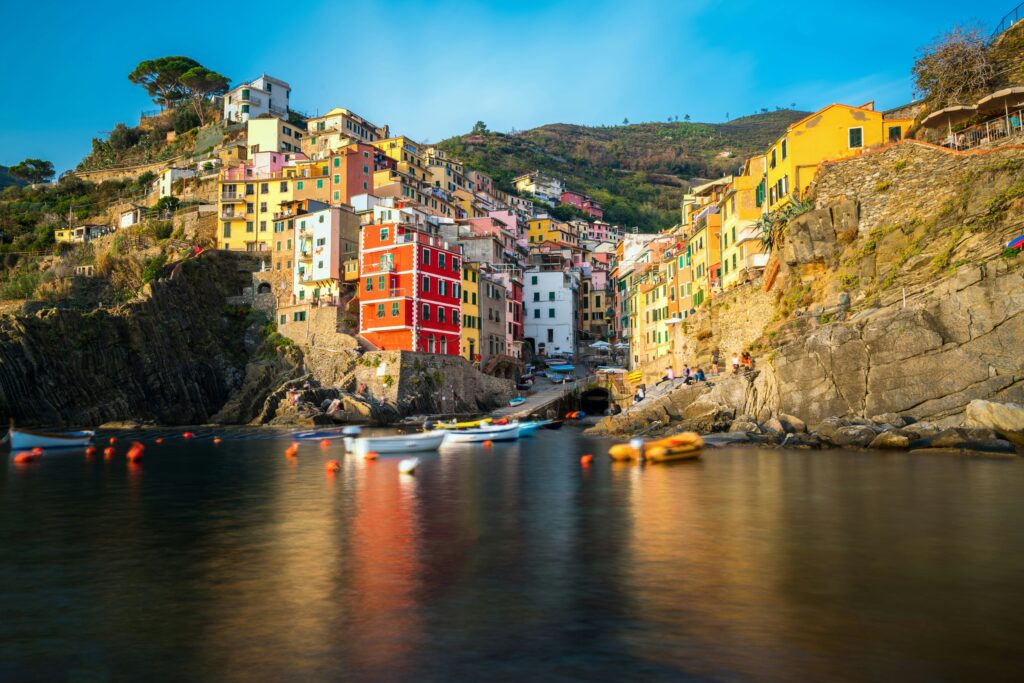
Cinque Terre — a weekend trip from wherever you’re based in Italy.
Weekend Travel From Italy: One of the Great Perks
Italy is one of Europe’s best bases for weekend travel. Low-cost carriers like Ryanair and EasyJet connect Italian cities to destinations across Europe for as little as €15–€50 each way. Within Italy, the Frecciarossa high-speed rail network makes Florence-Rome a 1.5-hour journey and Milan-Bologna an under-hour journey.
From Rome, you’re 2.5 hours from Barcelona by air. Milan, Prague, Vienna, and Amsterdam are under two hours. Weekend trips to the Amalfi Coast, Cinque Terre, the Italian lakes, and Sicily are all accessible without a flight. Dedicated guides to those destinations are coming — bookmark this site if you’re planning ahead.
For Teachers Coming From the US: Protecting Your Career
If you’re a US-based teacher, you likely don’t have to quit your job to make this happen. Most US school districts offer a personal leave of absence — commonly called an LOA — that allows tenured teachers to take 1–3 years off and return to their positions, tenure status, and often their pension protections intact.
Most teachers never ask because they assume the answer is no. It usually isn’t.
Our full guide on how to take a leave of absence from your US teaching job covers exactly how to approach that conversation with HR, what questions to ask, and how to get everything in writing before you commit to anything abroad.
The short version: talk to your HR department and union rep before you sign any contract in Italy. Get your LOA approved in writing first. Then go.
Before You Leave: The Logistics That Matter
A few things worth sorting before your flight, regardless of where you’re coming from:
- Banking — set up an account with no foreign transaction fees before you leave. The Charles Schwab Bank High Yield Investor Checking account reimburses all ATM fees worldwide and is widely recommended by expat teachers.
- Health insurance — confirm expat coverage before arrival. Italy’s public health system (Servizio Sanitario Nazionale) is available to legal residents, but coverage timing during your first months depends on your work permit status.
- Packing — don’t overdo it. Our complete packing list for teaching abroad covers exactly what makes the cut for a year overseas.
FAQs: Teaching English in Italy
Q: Do I need to speak Italian to teach English in Italy?
A: No — English-only instruction is standard at language schools and in Business English settings. That said, basic Italian for daily life (groceries, transport, navigating bureaucracy, understanding your lease) dramatically improves your experience on the ground. Most teachers pick up conversational Italian within a few months simply by being there.
Q: What qualifications do I need to teach English in Italy?
A: For language school positions, a TEFL or CELTA certification of at least 120 hours plus a bachelor’s degree is standard. International schools require a recognized teaching license and classroom experience. The CELTA — issued by Cambridge Assessment English — carries the most weight with competitive employers.
Q: How long does the Italian work visa process take?
A: Plan for 3–4 months minimum from job offer to visa approval for non-EU applicants. The nulla osta process through the Italian Ministry of Labor is the longest step. Start as early as possible and stay in close contact with your employer throughout. EU citizens do not need work authorization.
Q: Can I save money teaching English in Italy?
A: Realistically, no — not compared to destinations like Prague, Warsaw, or Southeast Asia. Italian salaries for English teachers are modest relative to the cost of living, particularly in Milan and Rome. Italy is best approached as a lifestyle experience rather than a financial opportunity.
Q: What’s the difference between teaching at a language school and an international school in Italy?
A: Language schools (scuole di lingue) hire TEFL-certified teachers for general and business English with students of all ages. International schools — like the International School of Milan or Rome International School — hire licensed teachers to deliver the IB or Cambridge curriculum in English. International schools pay significantly more and typically include housing allowances and flights.
Is Italy the Right Move for You?
Italy is one of the most beautiful places on earth to spend a year. The food alone is worth it. The history, the art, the pace of life — all of it lives up to what you imagined.
What Italy is not: easy to navigate bureaucratically, strong for savings, or the best entry point for first-time teachers without a clear job offer in hand. Go in with realistic expectations for the visa timeline and cost of living, research each employer carefully, and make sure your logistics are in order before you commit.
Do those things, and Italy delivers everything it promises.
The Teach in Europe Guide covers Italy in depth alongside six other European countries — salary data, visa details, city breakdowns, and job search strategy all in one place.
Get the Teach in Europe Guide →
Not ready for the full guide yet? Grab the free checklist and start mapping your timeline.